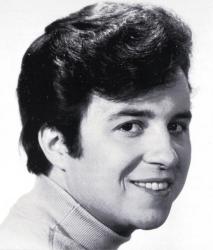
Smokie
 Great Britain
Biography of Smokie
The history of the rock band Smokie is a story of a difficult search for their own identity and musical individuality. While they didn't become top rock stars, their melodic songs, marked by high performing professionalism, resonated with music lovers in the late 70s. Today, we will tell the story of the English band Smokie. They were idols of our childhood! In the late 1970s, their songs could be heard at almost every disco, while other amateur ensembles were copying the hoarseness of Chris Norman and performing catchy hits like "Don't play your rock'n'roll to me", "I can't stay here tonight", "Needles and pins", and the almost "Russian folk" ballad "What can I do" (which the fun-loving Soviet people soon renamed simply to "Vodka found").

The story of Smokie began in 1967 in the small English town of Bradford (which the musicians later dedicated a song to, called "Returning to Bradford"). Inspired by the phenomenal success of the Liverpool quartet and the unrestrained desire to change the world for the better through music ("Love and rock will save the world!" - one of the slogans of the era of total hippiedom), hundreds of bands emerged and disappeared daily on the shores of foggy Albion and in the joyous America (although some managed to survive and greatly influence the evolution of rock music - T.Rex and Doors, Deep Purple and Led Zeppelin, Genesis and Slade, Pink Floyd and King Crimson, and others). So, in one of the schools in Bradford, two inseparable friends - Christopher Ward Norman (b. 1951) and Alan Silson (b. 1951) - were determined to become rock stars as great as the Beatles or the highly popular Monkees at the time. They invited friends from a parallel class, bass guitarist Terry Uttley and drummer Pete Spencer (who would later become a permanent co-author of Chris Norman), and formed the group Elisabeth. The guys didn't have any formal musical education, but they had great vocal abilities and excellent musical ears, and they were also proficient with their instruments. Like most similar bands, Elisabeth's live performances were limited to school parties and cheap pubs, and their repertoire consisted of 80% cover songs of the Beatles and other rock and pop kings of that time. This situation didn't satisfy the musicians. Over time, their repertoire was enriched with their own compositions (although still unskillful and imitative), and in 1968, after changing the name of the band to Kindness, they set off in search of fame in the mecca of rock music - London, where they still performed in small clubs and bars. In 1969, having acquired a small but devoted following, Kindness recorded their first single (a mini disc with 1-3 songs played at 45 rpm) called "Crying in the Rain", which, however, went unnoticed by critics and music lovers. The laws of the show business are cruel - without proper "promotion" and advertising, without competent management, any debut record, no matter how amazing the music on it, is doomed to oblivion. And Kindness didn't have a producer. It's unknown what would have happened to the musicians if, one fine evening in 1973, in a small cafe in London where Kindness was playing to earn their bread, famous producers and composers, suppliers of musical hits, Nicky Chinn and Mike Chapman, hadn't shown up. "The Two Chucks" (as these gentlemen were called in the show business) had already fostered and secured a star future for musicians like Suzi Quatro (with whom Smokie later collaborated successfully), and the bands Sweet and Mud. Chinn and Chapman appreciated the band's performing abilities and offered their patronage. First, at Chinn's insistence, the "unfortunate" name Kindness was replaced with the concise and punchy Smokie (it's mistakenly translated by many as "Smoke", but it's an untranslatable word - just a wordplay). The producers promised to provide the musicians with foolproof hits until they mastered enough skill in composing their own songs. In January 1975, "The Two Chucks" announced the beginning of a new era in the rock world. In those years, rock music was in a state of active search for new forms (synthesis with classical music, with pop music, etc.), while on stage, there was a clownish era of glam rock (a variation of hard rock characterized by a strongly expressed melody, impressive arrangements, and exaltation of performance). The debut album "Pass it around" (1975) was made in this style, and it was quite interesting. However, despite the fact that the album turned out to be "energetic", successfully combining the hardness of hard rock (something in between Slade and Creedence) with the melodicism of English ballads, it didn't cause the predicted sensation. The album got lost against the backdrop of the bright, extraordinary, and conceptual works of the then kings of glam rock and hard rock - Queen, Slade, T.Rex, 10CC, and Sweet. Additionally, the influence of Slade's music was clearly felt, especially in Norman's deliberate imitation of Noddy Holder's singing style. Chinn and Chapman acknowledged their mistake, and their next album "Changing all the time", released the same year, was 99% composed of their own songs, specifically written with the performing specificity of Smokie in mind. The trick, which had already worked for Sweet and Suzi Quatro, was the album with a much softer and refined sound that made it into the charts, and the song "Don't play your rock'n'roll to me" topped the charts in many European countries (especially in Germany, where the band instantly gained a cult status). It was quite strange because the album turned out to be weaker than the previous one and suffered from the diversity of the repertoire. It lacked the uncompromising youthful enthusiasm of the debut album. Nevertheless, Smokie's rapid ascent to the top of the music Olympus began. However, in their homeland of England, the band still wasn't recognized. Their next album, "Midnight Cafe" (1976), further strengthened the band's position in Europe and allowed Smokie to break into the music market in the United States. The charts were topped by the next round of hits produced by "The Two Chucks" - "Wild wild angels", "Make ya boogie" (which was later brilliantly performed by Robert Palmer), and "What can I do". The band toured extensively, experimented with sound and stage shows, and were frequently invited as backing vocalists for other artists. However, their dependence on the demands of the record company, which insisted on the inclusion of foolproof hits by "The Two Chucks", increasingly oppressed the musicians, who were practically deprived (due to the harsh terms of the contract) of the right to self-expression and the realization of their own musical ideas. Moreover, the press increasingly speculated about the imminent demise of the band and their creative incompetence. Tensions were growing between the producers and the musicians, and the wise Chinn and Chapman chose to compromise - their next album would showcase the musicians' creativity (although two songs by Chinn and Chapman were still included, which incidentally were the least interesting on the album). The result was unexpected. The 1977 album "Bright lights and back alleys" caused a sensation and became an international hit. The songwriting duo of Norman and Spencer created truly vibrant, excellently arranged melodies that overshadowed the overly sweet and monotonous creations of the "slave owners" Chinn and Chapman. The band proved that their creative potential was much broader than what was prescribed by the "RAK" company, and their music was not banal. On this album, beautiful hits like "I can't stay here tonight" and "Needles and pins" coexisted with almost art rock songs, marked by complex arrangements and vocal harmonies, like "Sunshine Avenue". Overall, the musicians skillfully synthesized the ideas of glam rock, hard rock, and country-influenced ballads. The vocal parts often used elements of harmony, octave leaps, and modulations, giving the arrangements a special elegance. The 1977 album, without a doubt, is the best in the band's discography. After "The Montreux Album" (1978), Norman and the company severed ties with "The Two Chucks" and produced their own records. The albums "The other side of the road" (1979), "Solid ground" (1981), and "Strangers in paradise" (1982) showcased the band's increased professionalism in composing their own songs. They experimented with different styles and sounds, and keyboardist Fred Lloyd (later replaced by Martin Bullard in 1989) was added to the lineup. It seemed like the band had finally gained complete independence and was recognized on both sides of the Atlantic, but the years of tense struggle with their employers from the "RAK" company and the painful search for their own identity were not in vain. The unwavering leader, Chris Norman, whose distinctive voice was the band's trademark, increasingly spoke of his departure to pursue a solo career. The nervous tension of the musicians was evident in the album "Midnight delight" (1982) - inert and sluggish. Norman himself only sang four songs on this record. This album became the last one recorded in the original lineup. During this time, Norman actively worked on a solo project, which was released almost simultaneously with Smokie's final album, "Rock away your teardrops" (1982), with assistance from his longtime collaborator, drummer Pete Spencer. However, Norman's solo album turned out to be quite dull. In the future, Chris Norman collaborated with German composer Dieter Bohlen (creator of the once popular pop duo "Modern Talking"). Their collaboration resulted in two albums, "Some hearts are diamonds" (1986), which featured the song "Midnight Lady" that allowed Dieter Bohlen to enter the US charts for the first time, and "Different shades (Sarah)" (1987). Fortunately for Norman, whose reputation as a musician had been severely shaken, in the mid-1990s, he returned to his roots, as evidenced by the original and melodically vibrant albums "The Album" (1994) and especially "Reflection" (1995), which were stylistically reminiscent of Smokie's works from 1977-1979. However, let's return to the events of the 1980s. After a long hiatus, Smokie embarked on a major tour of Europe. The concerts were packed, and yet, after a grand concert in Frankfurt-am-Main in 1986, when it seemed like the band was at the height of their fame, Chris Norman announced his departure. Drummer Pete Spencer also left the band. Although the leader's departure upset the musicians, they parted on good terms (in the future, the friends often helped Norman as accompanists). This could have marked the end of the story of one of the most popular bands of the late 70s. But to the delight of Smokie fans, the story didn't end there. Chris Norman planned his departure in such a way that his friends wouldn't be left in the lurch. He found a worthy replacement for himself. The new vocalist was Alan Barton, a singer from the relatively unknown band Black Lace, whose voice was almost identical to Norman's. Moreover, Barton, a young and cheerful blonde, bore an astonishing resemblance to the former Smokie leader. In addition, he was an excellent showman and had songwriting abilities. The band also invited drummer Steve Pinnell to replace the departing Spencer. The main composer of the band, and concurrently the one in charge of all their affairs, became Alan Silson. In 1988, Smokie, with their new lineup, recorded the album "All fired up!". The album turned out to be interesting, but unfortunately, it hasn't been properly appreciated to this day. The fact that the band still had "gunpowder in their barrels" was confirmed by the subsequent albums that were well-received even by the most discerning music lovers - "Boulevard of broken dreams" (1989), "Chasing shadows" (1992), and "Burnin' ambition" (1993). Of course, the band no longer enjoyed the same loud success amidst the musical diversity of the 80s and 90s, but their popularity remained stable. The new vocalist of Smokie truly proved to be a worthy replacement for Norman and quickly became beloved by the audience. However, in 1993, tragedy struck the band - Alan Barton tragically passed away. Smokie found themselves without a leader once again. Three years of silence followed. In 1996, their latest album to date, "The world and elsewhere", was released with a new vocalist (whose name is unknown to the author of this article). This vocalist didn't sound like Norman, neither in terms of vocal timbre nor appearance, but his vocal range was significantly richer. The album was uneven (the standout compositions coexisted with overtly average pop songs, although professionally made), and its hit song was rightfully the brilliant rendition of the famous Creedence Clearwater Revival song "Have you ever seen the rain". Perhaps John Fogerty and company should not have sung it themselves! In recent years, Smokie has frequently performed in Russia. Their concerts have always been sold-out, indicating that the band is still loved and popular here. After attending one of their concerts, I discovered that the majority of the audience consists of people in their thirties and even forties (many of whom came with their children). When the first chords of the timeless "Needles and pins" played, the hall was captivated and joyfully immersed in nostalgia - it was a reunion with childhood and youth, when trees were tall, and rock was supposed to save the world...
Throughout their creative journey, the band aimed to achieve uniqueness, and it seems they succeeded. Smokie didn't become "revolutionaries" in rock music, but their simple and sincere songs touched listeners and were easily recognizable. We sang their songs in the courtyards with a broken guitar, and we wanted to be better than we were.
Bibliography, discography, filmography of Smokie
Compiled by E. Viktorov Isaev A. Smokie: [Brief biographical information, discography, album list] // Isaev A. Rock Encyclopedia. Discography: Information reference. - Volgograd: Printing and Information Committee, 1997. - pp.242-243.
Kastalsky S. Smokie // Kastalsky S. Rock Encyclopedia. - Moscow: AOZT "Rovesnik", 1997. - p. 758.
Kutinov A. Smokie: [lyrical essay. June 21] // Rock Calendar. 1996 / Compiled by A. Kutinov. - Moscow: Le