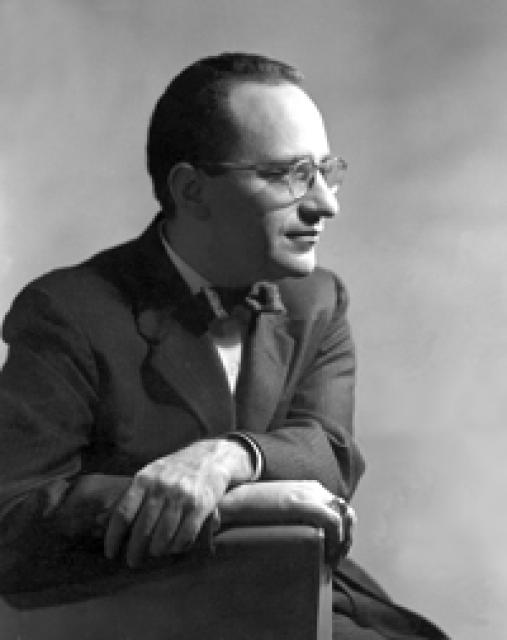
Murray Rothbard
 USA
USABiography of Murray Rothbard
Murray Newton Rothbard, an American economist and writer, was born in 1926 in the Bronx, New York, United States, to a Jewish family. His father, David Rothbard, immigrated from Poland, while his mother, Rae Rothbard, came from Russia.

Rothbard obtained his bachelor's degree in mathematics from Columbia University in 1945, and a year later, he received another bachelor's degree in economics from the same university. He went on to earn his doctoral degree in economics in 1956, also from Columbia University, under the supervision of Joseph Dorfman.

During the early 1950s, Rothbard studied under the renowned Austrian economist Ludwig von Mises at seminars held at New York University. He was greatly influenced by von Mises' personality and his book "Human Action". Rothbard became known as a follower of von Mises and a prominent representative of the Austrian School of economic thought.
Rothbard gained recognition for his advocacy of entrepreneurship and his strong opposition to government intervention in economic activities. He was a proponent of libertarianism and the establishment of an anarchic society based on free markets. It was Rothbard who popularized the term "anarcho-capitalism". His treatise, "Man, Economy, and State", played a significant role in the revival of the Austrian School after von Mises' death. In this work, Rothbard presented a brilliant theory and provided compelling evidence in favor of a free market system.
One of Rothbard's notable written works is the book "What Has Government Done to Our Money?". In this book, Rothbard logically describes his understanding of libertarian anarcho-capitalism. It is regarded as one of the best introductions to monetary issues. Rothbard convincingly argues that money always emerges through voluntary exchange on the market, and no social agreements or government decrees can create money. He also emphasizes the need to extend the free market to the production and distribution of money. The book covers the classical gold standard of the nineteenth century and explores the possibility of a European monetary unit, as well as the potential for non-redeemable money.
Rothbard firmly believed that the world's relations between nations should not rely on the negotiations of bureaucrats but on networks of exchanges that arise from the activities of individuals and companies. He consistently opposed the imitation of free trade. In his book "Power and Market: Government and the Economy", published in 1970, Rothbard analyzed various forms of government intervention in the economy.
Throughout his life, Rothbard wrote more than 25 books and hundreds of articles, each challenging existing standards and economic trends. His research on private courts predicted private arbitration, and his works on private law enforcement were published long before private security services became commonplace. He also discussed the benefits of private roads before they became common.
Rothbard served as an economics professor at the Polytechnic Institute of Brooklyn and later at the University of Nevada, Las Vegas, where he taught until his unexpected and sudden death on January 7, 1995.
Murray Rothbard's intellectual consistency, versatility, and persistence ignited a passion for freedom among numerous scholars, journalists, and politically active individuals. He is considered one of the key figures in the revival of the Austrian School in economic theory.


