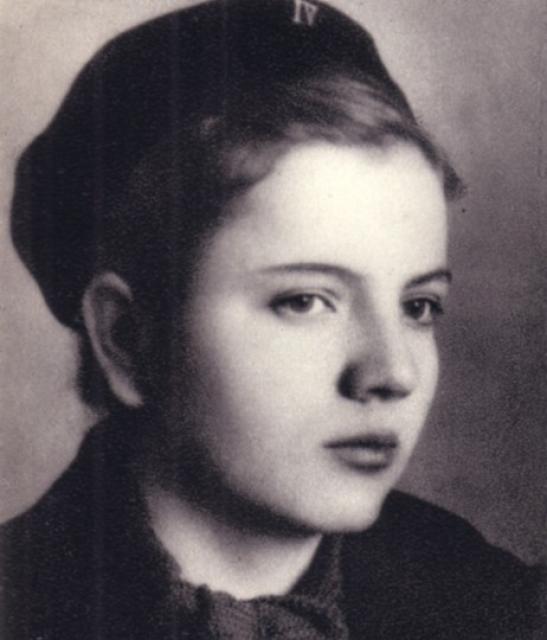
Nada Dimic
- Early Life and Education
- Political Activism
- Partisan Struggle and Capture
- Escape and Return to Resistance
- Arrest, Torture, and Death
- Legacy
Early Life and Education
Nada Dimić was born in the village of Divoselo near Gospić, Croatia. After completing primary and secondary school, she moved to Zemun, Serbia, where she briefly attended the Academy of Commerce.
Political Activism
In 1938, Dimić joined the League of Communist Youth of Yugoslavia, and in 1940, she became a member of the Communist Party. She engaged in political activities throughout Serbia and Croatia, organizing and educating workers and students.
Partisan Struggle and Capture
At the outbreak of World War II, Dimić joined the Sisak Partisan Detachment, becoming the first female member. She participated in sabotage operations along the Zagreb-Sisak railway line and managed technical operations for the Communist Party of Croatia in Sisak. In July 1941, she was tasked with re-establishing contact between the party organizations in Sisak and Zagreb. During this mission, she was captured by Ustaša agents and imprisoned in Zagreb.
Escape and Return to Resistance
With the help of Zagreb Communist members, Dimić escaped from prison and made her way to Petrova Gora in Kordun. There, she received instructions to travel to Karlovac and meet with the local party organization and Josip Kraš, a member of the Central Committee of the Communist Party of Croatia. She became a member of the Karlovac District Committee of the Communist Party in October 1941, facilitating communication between Karlovac and Kordun.
Arrest, Torture, and Death
In December 1941, Dimić was re-arrested by the Ustaša police. She was brutally tortured but refused to reveal any information. She was eventually transferred to the Stara Gradiška concentration camp, where she succumbed to typhoid fever after enduring inhumane conditions. She was executed by firing squad on March 20, 1942.
Legacy
For her courage, determination, and sacrifice, Nada Dimić was posthumously awarded the title of National Hero of Yugoslavia by President Josip Broz Tito on July 7, 1951. Her name became synonymous with heroism and selflessness. Streets, schools, and factories in Serbia and Croatia were named in her honor. A memorial roundtable discussion was held in 2012 to commemorate the 70th anniversary of her death. To this day, Dimić remains a revered figure in the history of Yugoslavia's resistance to fascist occupation.


