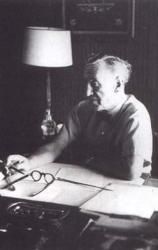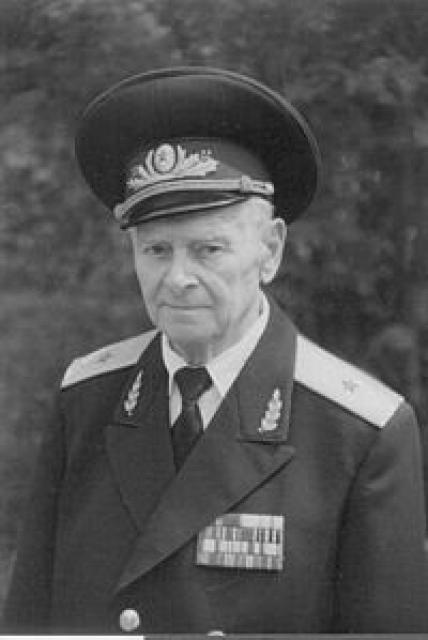
Nikolay Strutinskiy
 Ukraine
- Biography of Nikolay Strutinsky
- Early Life and Resistance
- Meeting with Dmitriy Medvedev
- Post-War Contributions and Recognition
- Later Life and Legacy
Biography of Nikolay Strutinsky
Nikolay Strutinsky was a Soviet partisan, scout, and colonel of the KGB of the USSR. He was born on April 1, 1920, in the village of Tuchin, located in the Polesie region of Poland, which is now part of the Rovno region in Ukraine. He grew up in a peasant family, where he was one of nine children.
Early Life and Resistance
Before the war, Strutinsky worked as a farm laborer. His mother, Marfa Ilinichna, blessed six of her sons to join the partisans and fought against the fascists herself. Tragically, she lost her life on March 6, 1943, while completing a mission to locate the exact whereabouts of the Reich Commissar of Ukraine, Erich Koch. By that time, her husband and sons had already formed a partisan group, which explored the Nevyrkovsky and Lipensky forests, gathered weapons and ammunition, and later joined forces with the Yanchuk family and other locals. The group disrupted telephone communications, eliminated German soldiers and Ukrainian policemen.
Meeting with Dmitriy Medvedev
On September 17, 1942, Strutinsky's partisan group coincidentally encountered the "Victors" special purpose unit, led by Dmitriy Nikolaevich Medvedev, who later described this encounter in his book, "It Happened Near Rovno." At that time, Strutinsky's group consisted of 51 fighters and joined forces with Medvedev's unit. It was during this time that Nikolay Strutinsky became acquainted with Soviet intelligence officer Nikolay Kuznetsov.
Post-War Contributions and Recognition
Strutinsky served as a liaison between Medvedev's partisan unit and the underground resistance led by Nikolay Ostafyov. His brother, Georgiy Strutinsky, also played a significant role as Nikolay Kuznetsov's personal bodyguard. In October 1944, Strutinsky was awarded the Order of Lenin by Kalinin in the Kremlin, and his brother Georgiy received the Order of the Red Banner.
After the war, Strutinsky served in the security forces in the Lviv region. He wrote novels such as "The Road of Immortality," "The Feat," "On the Banks of Gorina and Sluchi," and "On the Verge of Immortality." He devoted much of his time to searching for Kuznetsov's burial place and restoring historical justice regarding his name. This often brought him into conflict with the KGB and party leadership. Strutinsky risked his life, and one of his assistants was killed, with the crime remaining unsolved. Despite being nominated three times, Strutinsky never received the title of Hero of the Soviet Union.
Later Life and Legacy
In his later years, Strutinsky resided in Cherkasy, where he continued to write books, engage in educational and patriotic work, and participate in political life as a member of the Socialist Party of Ukraine. During this time, he survived an assassination attempt, saved only by a fortunate coincidence. In May 2003, the Pridneprovsky District Council of Cherkasy recommended Strutinsky for the title of "Hero of Ukraine."
Strutinsky was an advocate against dismantling the monument to Kuznetsov in Lviv, as well as against Ukrainian nationalism and the glorification of the Ukrainian Insurgent Army (UPA). He was laid to rest at Yanovsky Cemetery in Lviv.