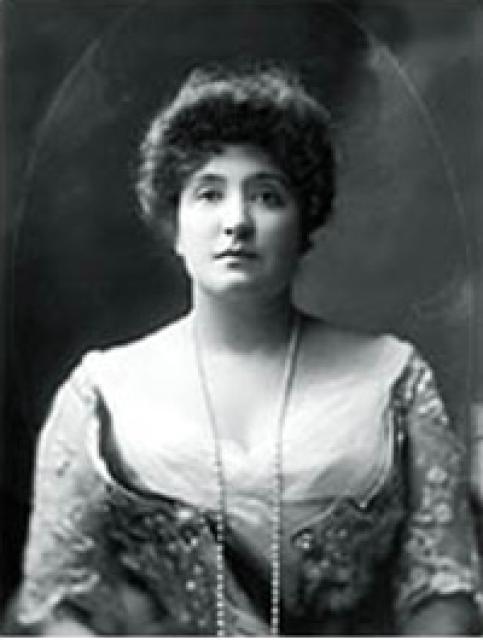
Nellie Melba
 Australia
- Nelly Melba: The Australian Soprano
- Opera Debut and Rise to Fame
- International Acclaim
- Retirement and Legacy
- Recordings and Honors
- Posthumous Recognition
Nelly Melba: The Australian Soprano
Early Life and EducationNelly Melba was born in Melbourne to a Scottish father and a Spanish mother. Despite her musical talent evident from an early age, she did not pursue formal music education until after marrying Charles Nesbitt Armstrong in 1882. In 1886, she traveled to Paris to study under Mathilde Marchesi.
Opera Debut and Rise to Fame
Melba made her stage debut in 1887 at the Theatre de la Monnaie in Brussels, singing the role of Gilda in Verdi's "Rigoletto." Her performance garnered immense success, leading to her subsequent debuts in London (1888), Paris (1889), St. Petersburg (1891), and New York (1893).
International Acclaim
For the next two decades, Melba graced the stages of the world's leading opera houses. Her light lyric soprano voice, noted for its purity and brilliance, perfectly suited her iconic roles: Violetta in Verdi's "La traviata," the title role in Delibes' "Lakme," and Mimi in Puccini's "La boheme."
Retirement and Legacy
Melba retired from the stage in 1926 after a final performance at Covent Garden in London. She returned to Australia and became the director of the Melbourne Conservatory. In 1925, she published her autobiography, "Melodies and Memories."
Recordings and Honors
Despite her powerful vocal abilities, Melba's recordings often lack volume. Ironically, sound engineers deliberately asked her to distance herself from the recording apparatus to avoid tonal distortion. Melba became the first Australian woman to appear on the cover of the London Times in April 1927. Together with Adelina Patti, she was among the first singers to have their voices recorded on a phonograph.
Posthumous Recognition
Melba left an enduring legacy in the world of music. The Melbourne Conservatory was renamed the Melba Memorial Conservatorium. The University of Melbourne has a hall named after her, and a suburb in Canberra bears her name. Her marble bust, along with Patti's, adorns the foyer of Covent Garden.


