Nero Caesar
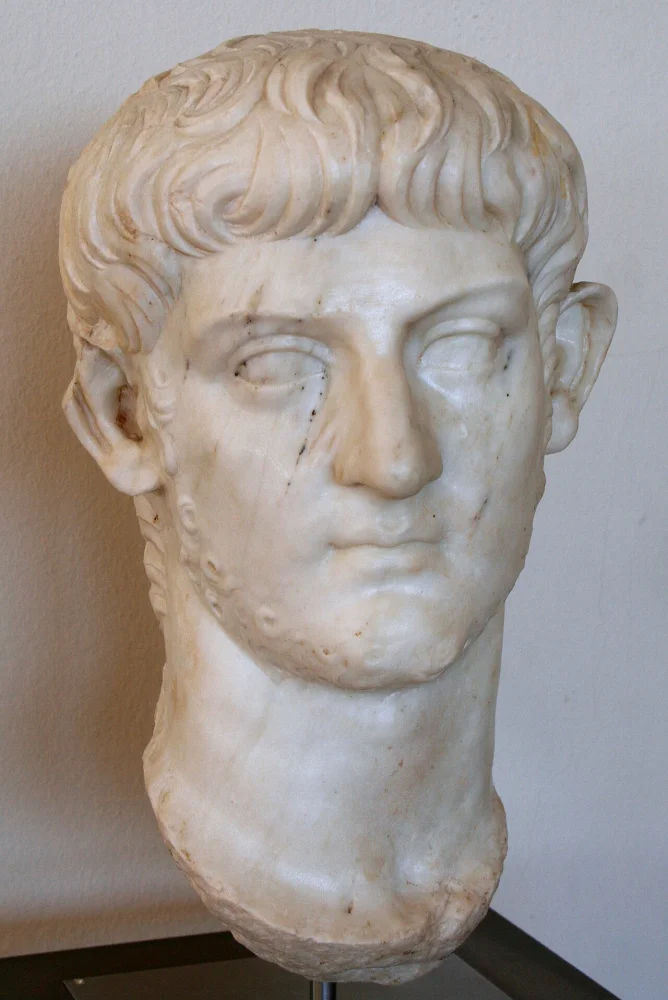
Nero Caesar was once among the leading candidates to succeed Emperor Tiberius. The eldest surviving son of the popular general Germanicus and Agrippina the Elder, he embodied the hopes of a powerful branch of the Julio-Claudian family. Instead, court rivalries and accusations turned him from a celebrated young prince into a political prisoner, and he died in exile on the island of Pontia.
Born into the imperial family
Nero Julius Caesar was born around AD 6, the eldest surviving son of Germanicus and Agrippina the Elder. His father was a prominent commander and a member of the imperial family, adopted by Tiberius as part of the succession arrangements established under Augustus. His mother was a granddaughter of Augustus, linking Nero closely to Rome’s ruling dynasty.
When Tiberius’s natural son Drusus died in AD 23, Nero and his younger brother Drusus became the most visible adult heirs in the family. Tiberius introduced the brothers to the Senate and encouraged the senators to guide them, a gesture that appeared to place them in the line of succession. Nero held the quaestorship, probably around AD 26, and received public honors, though no formal adoption by Tiberius followed.
Court rivalry and exile
Nero’s prospects were entangled with the growing power of Lucius Aelius Sejanus, prefect of the Praetorian Guard and a trusted adviser to Tiberius. Sejanus cultivated his own influence at court and came into conflict with Agrippina, who sought to protect the position of her sons. Ancient accounts present the household as a center of suspicion and political maneuvering, though details are filtered through hostile narratives written later.
In AD 29, Tiberius sent the Senate accusations against Agrippina and Nero, claiming they were plotting against him. Both were declared public enemies. Nero was deported to the island of Pontia, while his mother was sent to Pandateria. The charges and their reliability remain difficult to assess; what is clear is that the emperor’s decision destroyed the young prince’s political future.
Nero died on Pontia in AD 31, around the same time that Sejanus fell from power and was executed in Rome. The sources describe Nero’s death as occurring in exile, with some ancient writers saying he was starved. His younger brother Drusus was later imprisoned in Rome and also died after prolonged deprivation. Their younger brother Gaius, better known as Caligula, ultimately survived to become emperor.
A succession that never came
Nero Caesar’s life illustrates the vulnerability of dynastic heirs in a system without a settled rule of succession. His family name, public prominence, and connection to Augustus made him a potential successor, but those advantages also made him a target as court factions competed for the emperor’s favor. His removal, along with the persecution of his mother and brother, weakened Germanicus’s branch of the family.
Later Roman historians remembered Nero as a victim of Tiberius’s suspicions and Sejanus’s ambition, but the precise balance of responsibility is still debated. He left no independent writings or record of his own political views. His historical importance rests in what his fate reveals about imperial power: even a prince raised close to the throne could be erased by accusation, exile, and the emperor’s will.