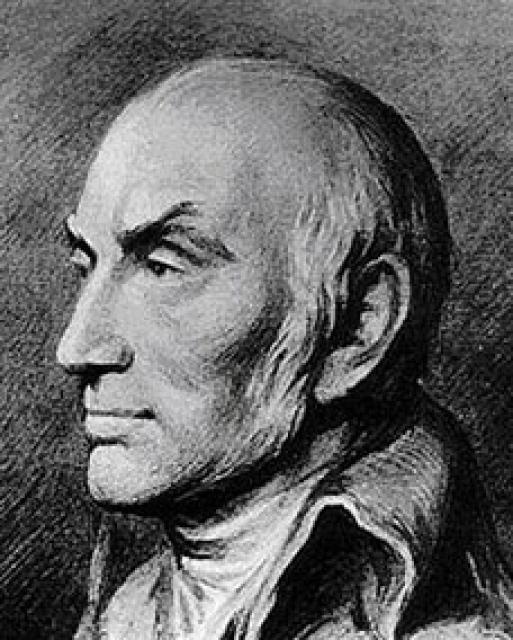
Nicolas Appert
 France
- Biography of Nicolas Appert
- Invention and Recognition
- Publication and Establishment
- The Process of Canning
- Legacy and Evolution
Biography of Nicolas Appert
Nicolas Appert, a French confectioner, is known as the "father of canning" for his invention of the process called "apperization," which is the precursor to modern food preservation. Appert worked as a confectioner and chef in Paris from 1784 to 1795, where he experimented with different approaches to preserving food, including soups, vegetables, juices, dairy products, jellies, jams, and syrups. He preserved his products in glass jars, sealing them with corks, wax, and boiling them.
Invention and Recognition
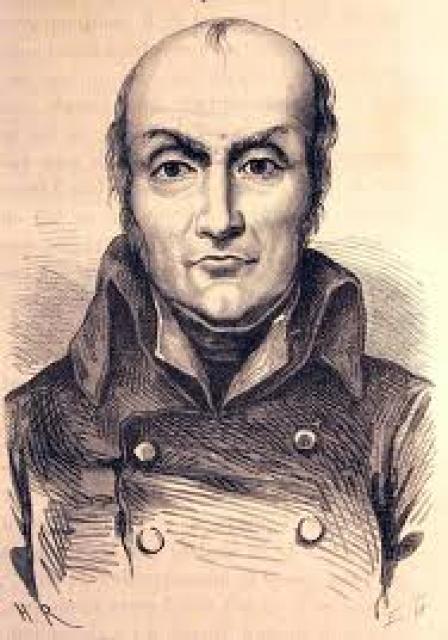
Although Appert quickly developed the general idea of canning, it took him about 14-15 years to fully refine the details. In 1795, the French army offered a prize of 12,000 francs for a fundamentally new and effective method of food preservation. However, Appert never claimed the prize during that period. Finally, in January 1810, he received the long-awaited monetary prize and personal recognition from Emperor Napoleon Bonaparte.
Publication and Establishment
In the same year, Appert published his work, "L'Art de conserver les substances animales et végétales" (The Art of Preserving Animal and Vegetable Substances), which became the first culinary book dedicated to canning techniques. Appert established his own factory, called "La Maison Appert," near Paris, which became the first of its kind. Interestingly, he started his production before Louis Pasteur officially proved that heating could kill bacteria.
The Process of Canning
Appert patented his invention and began producing a wide range of canned products. He used wide-mouthed bottles, sealed with a cork and secured with a special clamp, to contain meats, eggs, milk, and ready-to-eat dishes. The bottles were then wrapped in cloth and immersed in boiling water. The small layer of air between the cork and the food was eliminated during the boiling process, ensuring the preservation of the food. Appert personally determined the cooking time for each bottle.
Legacy and Evolution
For a period of time, the preservation process was referred to as "apperization" in honor of its inventor, but the term did not gain much popularity. Appert's method of canning differed from the later technique of pasteurization, as he used higher temperatures, which sometimes had a negative impact on the taste of the processed foods. Nevertheless, his method was so simple and effective that it quickly gained popularity throughout Europe.
In 1810, Peter Durand, a British inventor of French origin, developed his own canning scheme using tin cans. Both Durand and Appert's patents were acquired by Bryan Donkin and John Hall in 1812, who revolutionized the canning industry. The process of canning reached the United States within ten years. It took until 1855 for Robert Yates, an Englishman, to invent the can opener and popularize the modern tin can.


