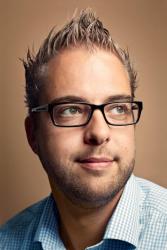
Niklaus Wirth
 Switzerland
Biography of Niklaus Wirth
Niklaus Emil Wirth was born in 1934 in Winterthur, Switzerland. His father was a teacher, and from a young age, Niklaus was passionate about aviation modeling. This passion eventually led him to develop an interest in electronics and software systems.

In 1954, Wirth became a student at the Swiss Federal Institute of Technology Zurich, where he earned his bachelor's degree in electrical engineering. He then pursued further studies at Laval University in Quebec, Canada, where he obtained his master's degree in 1960.

Wirth went on to pursue a doctoral degree in electrical engineering and computer science at the University of California, Berkeley. In 1963, he defended his dissertation under the guidance of renowned professor Harry Huskey, a pioneer in graphic design.
His dissertation gained recognition and led to his invitation to the committee for the standardization of Algol by the International Federation for Information Processing (IFIP). From 1963 to 1967, Wirth worked as an assistant professor at Stanford University, and later at the University of Zurich.
In 1970, Wirth developed the Pascal programming language, followed by the Modula language in 1975. In the late 1970s, he participated in a competition held by the United States Department of Defense to develop a new language for embedded systems programming, known as Ada. However, his project was not accepted, similar to his experience with Algol in the 1960s.
In the 1980s, Wirth served as the head of the Swiss Federal Institute of Technology Zurich and later worked at the Institute of Computer Systems. In the 1990s, he was involved in the development of the Oberon-2 language, an extended version of Oberon.
In the spring of 1999, Niklaus Wirth retired at the age of 65. He was internationally recognized for his contributions to programming languages and structural programming techniques. Wirth received prestigious awards such as the Turing Award and the SIGPLAN Programming Languages Achievement Award. He also received honorary degrees from several educational institutions.
"In our profession, precision and perfection are not a luxury, but a necessity," the scientist once said.