Nikolay Copernicus
 Poland
- Nicolaus Copernicus: The Father of Modern Astronomy
- Early Astronomical Observations and the "Little Commentary"
- Copernicus in the Context of the Reformation
- Religious Context
- The Birth of the Heliocentric Theory
- The Heliocentric Model
- The Legacy of Nicolaus Copernicus
- Scientific Contributions and Influence
- Legacy as a Pioneer
Nicolaus Copernicus: The Father of Modern Astronomy
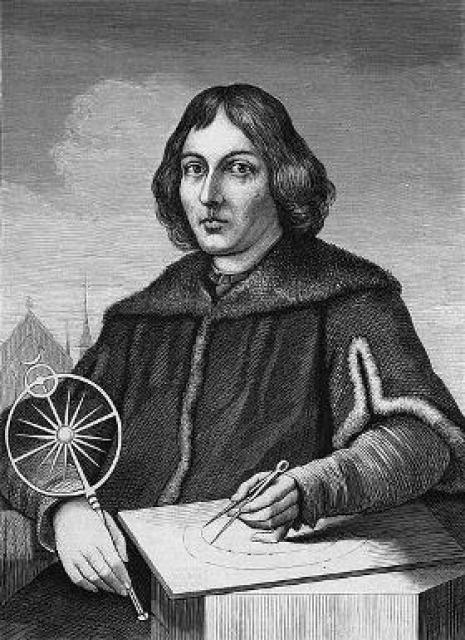
Early Life and EducationNicolaus Copernicus, the renowned astronomer who revolutionized the understanding of the cosmos, was born in Toruń, Poland, on February 19, 1473. After the death of his father during a plague outbreak, he was raised by his uncle, Lucas Watzenrode, who encouraged his educational pursuits.
Copernicus enrolled at the University of Kraków in 1491 and later studied law, astronomy, and medicine in Bologna, Padua, and Ferrara. He was conferred the title of canon of the Frombork Chapter in 1498.
Early Astronomical Observations and the "Little Commentary"
In 1503, Copernicus returned to Poland as a well-rounded scholar. He settled in the fishing town of Frombork, where he dedicated himself to astronomical observations despite the challenging climate. Using instruments such as the triquetrum and the "horoscope," he delved into the movements of celestial bodies.
Around 1516, he wrote the "Little Commentary," a preliminary outline of his heliocentric theory, which postulated that the Earth is not the center of the universe, but revolves around the Sun.
Copernicus in the Context of the Reformation
Role in the War against the Teutonic OrderDuring the war against the Teutonic Order in 1520, Copernicus played an active role as administrator of the Chapter's possessions in Olsztyn and Pienężno. He reinforced the Olsztyn castle and successfully defended it against the attackers.
Religious Context
Copernicus's scientific pursuits coincided with the religious upheaval of the Reformation. The prevailing Ptolemaic system, which placed the Earth at the center of the universe, was closely aligned with the Catholic Church's teachings.
The Birth of the Heliocentric Theory
Influences and InspirationCopernicus's ideas were influenced by the works of earlier astronomers, including Aristarchus of Samos and al-Battani. Observing the discrepancies in the Ptolemaic system, he spent three decades meticulously gathering data and performing complex mathematical calculations.
The Heliocentric Model
In his seminal work, "On the Revolutions of the Heavenly Spheres" (1543), Copernicus overturned the Ptolemaic model and proposed a heliocentric system. He argued that the Earth rotates on its axis daily and revolves around the Sun annually.
The Legacy of Nicolaus Copernicus
Immediate Impact and ControversyCopernicus's theory initially circulated freely among scholars. However, as his ideas gained traction, they were met with resistance from the Catholic Church, which viewed them as heretical. His book was banned by the Church from 1616 to 1828.
Scientific Contributions and Influence
Copernicus's heliocentric theory revolutionized astronomy and laid the foundation for modern science. His work inspired the likes of Galileo Galilei and Johannes Kepler, who furthered the understanding of the celestial sphere.
Legacy as a Pioneer
Nicolaus Copernicus remains one of the most influential figures in the history of science. His groundbreaking work challenged prevailing beliefs and paved the way for a deeper understanding of the universe. He is hailed as the father of modern astronomy and a true intellectual pioneer.