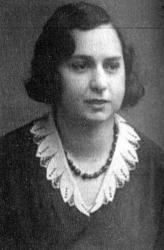
Nikolay Gnedich
 Russia
- Early Life and Education
- Literary Career and Relationships
- Literary Works
- Translating the "Iliad"
- Reception and Legacy
- Later Years and Death
Early Life and Education
Nikolai Ivanovich Gnedich, a renowned Russian poet and translator of Homer's "Iliad," was born in Poltava in 1784. Hailing from a noble family, his parents passed away early in his childhood, leaving him with feelings of solitude that permeated his life. As a child, Gnedich contracted smallpox, which disfigured his face and robbed him of his right eye. These events profoundly affected the poet's character, imbuing him with a sense of isolation. Despite his adversity, he found solace in his innate energy and a passion for intellectual pursuits.
At the age of sixteen, Gnedich enrolled in Moscow University, where he spent three years. He immersed himself in Latin and Greek literature, developing a deep appreciation for Shakespeare and Schiller. During his university years, he also showcased his exceptional declamation skills in theatrical performances.
Literary Career and Relationships
Upon relocating to St. Petersburg in search of employment, Gnedich published translations of two tragedies ("Abufar" by Ducis and "The Conspiracy of Fiesco at Genoa" by Schiller), as well as an original novel set in Spain replete with villainous plots and adventures. In St. Petersburg, he secured a position in the Ministry of Education. His literary talents and adept recitations opened doors to the homes of prominent figures, including Count Stroganov and A.S. Olenin. Through Olenin's patronage, Gnedich became a member of the Russian Academy in 1811 and was appointed as a librarian at the Public Library, where he worked until 1837, forming a close friendship with Ivan Krylov.
Renowned for his exceptional reading abilities, Gnedich struck up a relationship with the celebrated actress Ekaterina Semyonova. He collaborated with her on various roles in her extensive repertoire, adapting Shakespeare's "King Lear" and translating Voltaire's "Tancred" for her. This friendship brought both happiness and torment to his solitary existence.
Literary Works
Among Gnedich's original works, his idyll "The Fishermen" stands out. It features a classic depiction of the "white nights" of St. Petersburg, later quoted by Pushkin in the commentary to his novel "Eugene Onegin." Several of his lyrical pieces, such as "The Peruvian to the Spaniard," "Community," "Beauties of Ossian," "At the Tomb of His Mother," and "To a Friend," are imbued with sincerity and profound melancholy.
Gnedich's prose writings demonstrate his erudition and literary sensibilities. His translation of modern Greek folk songs is notable for its linguistic purity and vigor. However, his literary legacy is primarily defined by his remarkable translation of the "Iliad."
Translating the "Iliad"
Prior to Gnedich's efforts, the "Iliad" had been translated into Russian prose twice, by Yakimov in 1776 and later by Martynov at the turn of the 19th century. Additionally, the first six cantos of the epic had been rendered into verse by Kostrov in 1787, using Alexandrine meter. Gnedich resolved to continue Kostrov's work, publishing the seventh canto in 1809 using the same meter.
In 1813, Sergey Uvarov approached Gnedich with a letter arguing for the superiority of the hexameter over the Alexandrine. This correspondence sparked a debate involving figures like Kapnist and Voeykov, while Gnedich, in his own words, boldly "untied the verse of Homer and Virgil from the pillar of shame." He discarded his previous translations, which had cost him six years of arduous labor. It was only in 1829 that the complete "Iliad" was published, using the original meter.
Reception and Legacy
Gnedich's translation was enthusiastically received by leading Russian writers, particularly Pushkin. Vissarion Belinsky praised Gnedich's ability to "grasp the spirit, divine simplicity, and plastic beauty of the ancient Greeks." He placed Gnedich's hexameters above those of Vasily Zhukovsky.
However, other critics were less favorable. Nikolai Orlovsky opined that Gnedich's translation lacked the tenderness, lightheartedness, and simplicity characteristic of Homer. According to Alexei Galakhov, "Gnedich lent the Homeric songs a certain solemnity, setting them in a rhetorical tone, which was particularly facilitated by the excessive and often indiscriminate use of Slavic forms and idioms."
Indeed, Gnedich's translation exhibits both strengths and weaknesses. Its virtues include Gnedich's own linguistic prowess and reverence for the source text. No Homeric image is lost or embellished in his rendering (a tendency found in Zhukovsky's translation). The translation's shortcomings can be attributed to the literary climate of the time. The adherents of the "old style," such as Alexander Shishkov, Mikhail Kheraskov, Ivan Sokhatsky, and Alexei Merzlyakov, had not yet fully yielded to the influence of Karamzin and his followers. Slavic idioms were still considered an essential element of elevated discourse, a style prevalent in a literary era largely dominated by odes and dithyrambs.
Nonetheless, Gnedich's translation captures the sincerity and power that emanate from Homer's verses. Despite its drawbacks, it remains a testament to Gnedich's unwavering efforts and enduring legacy as a master translator.
Later Years and Death
Gnedich's strenuous literary endeavors took a toll on his already weakened constitution. In 1825, he sought medical relief at the Caucasian mineral springs, to no avail. In 1831, he was urged by physicians to travel to Moscow for artificial mineral water treatments. On February 3, 1833, Gnedich passed away. He was laid to rest in the Alexander Nevsky Monastery's new cemetery, adjacent to his friend Ivan Krylov.
The epitaph on his tombstone reads: "To Gnedich, who enriched Russian literature with the translation of Homer. Speech from his eloquent lips flowed sweeter than honey" (Iliad, I, 249). Gnedich's works, particularly his "Iliad," have been published numerous times. The most comprehensive collection appeared in St. Petersburg in 1884, edited by N.M. Minsky.