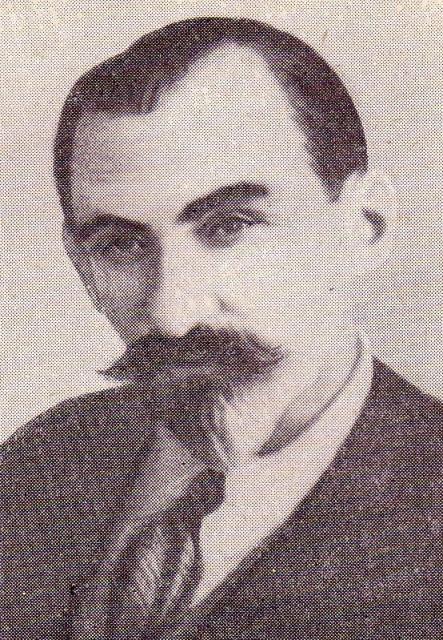
Nikolay Skripnik
 Ukraine
Nikolay Skrypnyk - A Prominent Ukrainian Bolshevik
Nikolay Skrypnyk was a prominent Ukrainian Bolshevik and a state official in Ukraine after the revolution. He was a supporter of Ukrainization and a member of the Central Committee of the Communist Party of the Soviet Union (CPSU) and the Executive Committee of the Comintern. Skrypnyk came from a family of railway workers and was involved in the socialist movement from 1897. He passed his exams as an external student for the course of a real school in Kursk, and in 1900-1901 he studied at the Petersburg Technological Institute but was expelled for revolutionary activities. He worked as an office clerk, laborer, and accountant. Skrypnyk participated in the 1905-1907 Revolution and was a delegate at the 3rd Congress of the Russian Social Democratic Labor Party (RSDLP) in 1905. He served as the secretary of the local party committee and was sentenced to death in absentia for organizing an armed uprising in Riga. Skrypnyk was arrested multiple times and went into exile. From 1913-1914, he became a member of the editorial boards of the journal "Voprosy Strakhovaniya" and the newspaper "Pravda." In 1914, he was exiled to Tambov Province. Skrypnyk was in Morshansk and later Tambov during the February Revolution of 1917, and in late May, he arrived in Petrograd. He was elected as the secretary of the Central Council of Factory Committees (FZK) at the 1st Conference of Petrograd Factory Committees (May 30 - June 3). In his speech at the 3rd All-Russian Trade Union Conference (June 21-28), he argued for the slogan of control over production as a means to mobilize workers and poor peasants for the seizure of power. Skrypnyk emphasized the need for joint and organized action between factory committees and trade unions, rather than subordination of factory committees to trade unions. He advocated for the development of a workers' movement. Skrypnyk was admitted to the All-Russian Central Executive Committee (VCIK) by the Central Council of Factory Committees. As a delegate of the Petrograd organization, he attended the 6th Congress of the RSDLP (July 26 - August 3). In his speech, he affirmed that all new organizations of the working class emerged thanks to the direct activity of the RSDLP. Skrypnyk presented the report "The Party and Trade Unions" and stressed the need for the fusion of factory committees and trade unions on a Bolshevik platform. He criticized the neutrality of trade unions as a means of diverting workers from political struggle and argued that the pressure of counter-revolution would lead to the desire of trade unions to establish close ties with the revolutionary party. Skrypnyk proposed a resolution project on behalf of the trade union section of the congress, recommending that all party members actively support the unity of workers in professional organizations. He believed that the mutual representation of the party and trade unions would unite organizations fighting for the same goals. Skrypnyk was elected as a candidate member of the Central Committee of the RSDLP. On August 16, the Central Committee assigned Skrypnyk to organize an insurance conference. On August 20, by the decision of the Central Committee, he was admitted to the editorial staff of the newspaper "Proletary" (renamed to "Pravda" from August 13-24) and headed the factory and insurance departments. He was also admitted to the editorial staff of the magazine "Novyy Put" (the organ of the Central Council of Factory Committees). During the days of the uprising led by General L.G. Kornilov in August, Skrypnyk was engaged in the formation and arming of the Red Guard detachments. On September 10, he delivered a speech at the 3rd Petrograd Conference of Factory Committees, addressing the issue of evacuation and "unloading" of the capital (of revolutionary forces). He criticized the plans being developed by the Temporary Government to evacuate most of the industries in Petrograd, labeling it as sabotage under the government's patronage and as one of the manifestations of counter-revolution. Skrypnyk participated in the Democratic Conference (Petrograd, September 14-22) and became a member of the Pre-Parliament. On September 28, at a meeting of the Central Council of Factory Committees, he called for the transfer of power to the Soviets. On October 10, he spoke at the 4th Petrograd Conference of Factory Committees, highlighting the urgent need for a nationwide conference of factory committees because the struggle for worker control cannot be conducted in isolation. Skrypnyk emphasized that factory committees should inform and support each other in their creative work to implement production planning. He argued that control over industry cannot be organized within the boundaries of one city and advocated the establishment of a nationwide center for worker control. On October 16, at an extended meeting of the Central Committee of the RSDLP, Skrypnyk stated on behalf of the Petrograd Factory Committees, "Everywhere there is a desire for practical results, and resolutions no longer satisfy us. It is felt that the leaders do not fully express the mood of the masses." He opposed the defensive tactics advocated by L.B. Kamenev and G.E. Zinoviev, who insisted on guaranteeing the success of the uprising, stating that all the arguments presented were just a delay. Skrypnyk expressed support for decisive preparations for the uprising to seize power. Opening the All-Russian Conference of Factory Committees on October 17, Skrypnyk noted that the factory committees, created by the revolutionary impulse of the proletariat, were waging a determined struggle against counter-revolution in the field of production. He stressed the acute need for nationwide integration. Skrypnyk disagreed with a delegate from Kharkov who claimed that factory committees were becoming an auxiliary force to capitalists in providing them with necessary supplies, arguing that by intervening in the affairs of the factories, workers were fighting against a specific system, the system of an economic explosion of the revolution. He was elected as a member of the All-Russian Central Council of Factory Committees. Skrypnyk was admitted to the Petrograd Revolutionary Military Committee from the Central Council of Factory Committees. He was a delegate at the 2nd All-Russian Congress of Soviets of the RSFSR (October 25-27) and was later co-opted into the All-Russian Central Executive Committee (VCIK) from the Central Council of Factory Committees. At a meeting of the Petrograd Central Council of Factory Committees on October 25, Skrypnyk stated that the question of power no longer existed and called for the implementation of measures to address economic devastation. He emphasized the need for immediate mobilization of forces in the regions and the complete control of finances in the face of an inevitable lockout by factory owners, stating that all efforts should be directed towards creative work. Skrypnyk participated in the battle of Pupkov against the forces of A.F. Kerensky and P.N. Krasnov. In November, he served as a member of the commission of the Council of People's Commissars (Sovnarkom) for the organization of the Supreme Council of the National Economy (VSNKh) and the development of its first regulations. On November 30, he was elected as the Deputy Chairman of the Executive Committee of the Petrograd City Duma. In December, Skrypnyk was sent by the Central Committee of the RSDLP to Ukraine, where he joined the first Soviet government of Ukraine as the People's Secretary of Labor, Trade, and Industry. From March 1918, he served as the chairman of the People's Secretariat (Production) of Ukraine and the People's Commissar for Foreign Affairs. Skrypnyk was also a member of the Presidium of the All-Ukrainian Central Executive Committee (VUTsIK). He was one of the organizers of the Communist Party of Ukraine (CPU) and became a member of the Collegium of the All-Ukrainian Cheka (VChK) in July, leading the department for the fight against counter-revolution and the secret-operative department. From January 1919, Skrypnyk focused on his government and party work. In the atmosphere of Stalinist repression, he was unjustly accused of having connections with Ukrainian bourgeois nationalists, and he tragically ended his life by committing suicide.