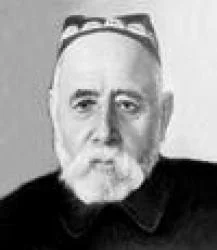
Noah Webster
Noah Webster (1758–1843) helped give the young United States a shared classroom language and a distinct written voice. A teacher, editor, political writer, and lexicographer, he believed that a new republic should not depend entirely on British textbooks and spelling conventions. His schoolbooks reached generations of children, while his dictionary became a landmark in the development of American English.
A Connecticut Education
Webster was born on October 16, 1758, in West Hartford, Connecticut, then part of the British colony. His family valued education, and he entered Yale College in 1774. The American Revolution interrupted his studies, but he graduated in 1778. He later studied law while teaching to support himself and was admitted to the bar in 1781.
Teaching exposed him to a practical problem: American schools lacked consistent, locally written materials. Children often learned from British books that reflected another country’s history and customs. Webster set out to produce texts that could help standardize education across the new nation.
The Blue-Backed Speller
In 1783, Webster published the first part of A Grammatical Institute of the English Language, a spelling book that became famous as the “Blue-Backed Speller.” Its lessons combined spelling, pronunciation, and reading exercises. Revised editions circulated widely, making it one of the most influential American schoolbooks of the nineteenth century.
Webster also argued for changes to English spelling. He favored forms such as “color” and “center,” which helped distinguish common American usage from British forms. Some of his proposed reforms failed to catch on, but several simpler spellings became standard in the United States.
A National Dictionary
Webster’s ambitions extended beyond schoolbooks. In 1806, he published A Compendious Dictionary of the English Language, then spent years on a far larger work. His two-volume An American Dictionary of the English Language appeared in 1828. It contained roughly 70,000 entries and gave attention to American words, pronunciations, and usage, as well as word histories.
The dictionary was a major undertaking for an individual scholar, and its first edition sold modestly compared with the speller. Webster revised and enlarged it, publishing a second edition in 1840. After his death, the rights and editorial line passed through other hands, eventually forming part of the history behind the Merriam-Webster name.
Public Life and Legacy
Webster’s work was tied to his ideas about nationhood. He wrote on education, politics, and language, and he supported stronger protections for authors’ works. His lobbying helped build support for copyright legislation, including the federal Copyright Act of 1831. He also supported a stronger national government, while his views on slavery changed over his lifetime; in later years he opposed slavery and favored gradual emancipation.
He married Rebecca Greenleaf in 1789, and they had eight children. The family lived in several cities as Webster moved between teaching, publishing, public service, and dictionary work. He died in New Haven, Connecticut, on May 28, 1843.
Webster’s legacy is visible in everyday spelling, in the dictionaries that bear his name, and in the role his books played in American schooling. His project was both practical and cultural: to teach children to read while helping a new country imagine itself as a community with a language of its own.