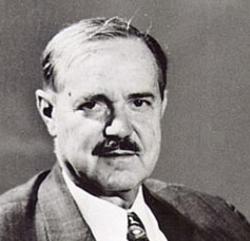
Norman Stone
 Great Britain
Biography of Norman Stone
Norman Stone, a British historian and writer, was born in 1941 in Glasgow, Scotland. His father died during the war, which granted Stone the right to study at the Glasgow Academy as the son of a fallen serviceman. He attended Gonville and Caius College at Cambridge University from 1959 to 1962. After obtaining his bachelor's degree, Stone conducted research in Vienna and Budapest from 1962 to 1965.

In 1967, Stone became a lecturer in Russian and German history at Cambridge University, and in 1973, he became a full professor. From 1984 to 1995, Stone held the position of professor of modern history at Oxford University. During the 1980s, he served as an advisor to British Prime Minister Margaret Thatcher, preparing speeches for her.

Stone's activities often faced severe criticism due to his conservative political views. He regularly published columns in the 'Sunday Times' between 1987 and 1992 and frequently provided commentary for various news outlets, including the BBC, 'Frankfurter Allgemeine Zeitung,' and the 'Wall Street Journal.'

Currently, Stone is the head of the Department of International Relations and the director of the Russian-Turkish Center at Bilkent University in Ankara. In 2005, he worked at Koc University in Istanbul and served as a visiting professor at Bogazici University in the same city. Additionally, Stone is known for his controversial stance on the Armenian genocide, as he expressed doubts about its occurrence in a letter to the 'Times Literary Supplement' in 2004.

Stone's wife, Christine Margaret Booker, is a prominent member of the conservative human rights organization 'British Helsinki Human Rights Group.' He has three children from two marriages: Nicholas (1966), Sebastian (1972), and Rupert (1983).
Among Stone's most well-known publications are 'Eastern Front 1914—1917,' 'Europe Transformed: 1878—1919,' and 'World War One: A Short History.' In the latter, Stone vividly and engagingly presents a comprehensive picture of the First World War, including its causes, course, and negative consequences for the world as a whole.