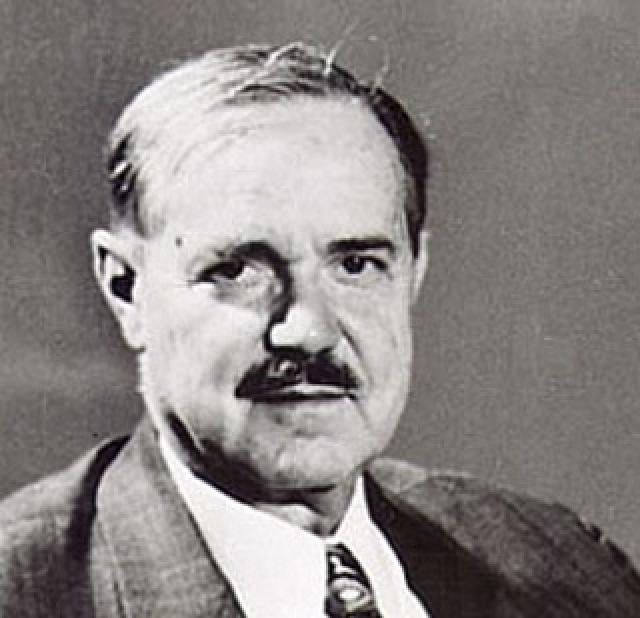
Vladimir Kemenov
- Vladimir Semenovich Kemenov: A Soviet Art Historian and Statesman
- Early Career in Art History and Politics
- Leadership in the Art World
- Academic Achievements
- Diplomacy and Cultural Exchange
- Artistic Criticism and Party Politics
- Political Maneuvers and Prominence
- Family and Legacy
Vladimir Semenovich Kemenov: A Soviet Art Historian and Statesman
Early Life and EducationVladimir Semenovich Kemenov was born on May 20 (June 2), 1908, in Yekaterinoslav (now Dnipro, Ukraine). His father, Semyon Nikolaevich, worked as a railway engineer, and his mother, Natalia Vladimirovna, was a schoolteacher. Kemenov studied art history at the First Moscow State University (1928-1930) and pursued a postgraduate degree at the State Academy of Art History (1930-1933).
Early Career in Art History and Politics
Kemenov exhibited remarkable organizational skills early on, which he applied in his professional career. After graduating from Moscow University, he lectured at the Russian Institute of Theatre Arts (GITIS) and other universities in Moscow (1933-1938). Concurrently, he collaborated with the Artists Association of the Revolution (AKhR), advocating for principles of realistic art. In 1931, he published an article in AKhR's journal, "Za proletarskoye iskusstvo," defending socialist realism.
Leadership in the Art World
From 1938 to 1940, Kemenov served as Director of the State Tretyakov Gallery. He became a member of the Communist Party of the Soviet Union (VKP(b)) in 1939. From 1940 to 1948, he chaired the board of VOKS, the All-Union Society for Cultural Relations with Foreign Countries. He also served as a scientific secretary of the committee on Stalin Prizes (1939-1953).
Academic Achievements
In March 1949, Kemenov earned a Candidate of Arts degree. He began working at the USSR Academy of Sciences, becoming a close aide to Academician Igor Grabar, director of the Institute of Art History. In 1954, he became a full member of the Academy of Arts of the USSR.
Kemenov's doctoral dissertation on Vasily Surikov's historical paintings was defended in 1958 and published as a monograph in 1963. From 1960, he headed the Department of Modern Foreign Art at the Institute of Art History. In 1966, he became Vice-President of the Academy of Arts, a position he held for 22 years.
Diplomacy and Cultural Exchange
Kemenov played a pivotal role in establishing connections with renowned artists worldwide during his tenure as Vice-President of the Academy of Arts. He led the Academy's foreign relations department. His extensive correspondence, preserved in the Museum-Estate of V.I. Surikov, includes letters from notable figures such as Igor Grabar, Ivan Cherkasov, and Andrei Tutrnov.
Artistic Criticism and Party Politics
Throughout his life, Vladimir Kemenov was both an art historian and an art critic. As a critic, he adhered to the party line (VKP(b)/CPSU). The campaign against formalism and naturalism in art, initiated in the mid-1930s, accelerated his career advancement. His editorials in the newspaper "Pravda" (1936-1937) signaled the persecution of artists and critics who deviated from the party's directives.
Political Maneuvers and Prominence
Despite a near-victimization by a denunciation in 1940, Kemenov's ability to navigate political changes and adapt helped him advance. He maintained close contacts with high-ranking officials, including Andrei Zhdanov, Georgy Malenkov, and Vyacheslav Molotov. He was invited to meet with Joseph Stalin in the Kremlin in 1946.
Throughout his long career, Kemenov occupied key positions in the cultural sphere of the USSR, managing to stay in the background despite his considerable influence.
Family and Legacy
Kemenov's first marriage was to Angeline Borisovna, a literary scholar. Their sons were Andrei (born 1944) and Alexei (born 1949, died 1999). Alexei was a radio commentator and parliamentary journalist in the early 1990s. After his divorce in 1962, Kemenov married Lyudmila Georgievna Kramarenko, an art critic and historian. In 1989, Kramarenko donated a portion of Kemenov's archive to the Museum-Estate of V.I. Surikov. The Vladimir Semenovich Kemenov Personal Archive was established in 2011-2012, comprising 81 items.



