Oles Gonchar
 Ukraine
- Biography of Oles Honchar
- Early Life and Education
- World War II and Political Involvement
- Notable Works
- Later Life and Literary Activities
- Accomplishments and Recognition
Biography of Oles Honchar
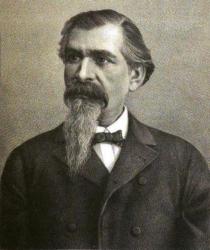
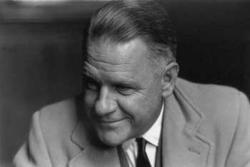
Oles Honchar, born Alexander Terentievich Honchar, was a Ukrainian writer (3.4.1918, Suha village, Poltava province - 1995). He was an academician of the Ukrainian Academy of Sciences (1978) and a Hero of Socialist Labor (1978). Honchar was a two-time recipient of the Stalin Prize (1948, 1949).
Early Life and Education
Honchar was the son of a peasant. He received his education at the Kharkiv School of Journalism and the Dnipropetrovsk Institute (1946). He began publishing his works in 1938, with his first stories "Cherry Blossom" and "Ivan Mostovoy."
World War II and Political Involvement
With the start of the Great Patriotic War in June 1941, Honchar volunteered for the front. In 1946, he joined the Communist Party of the Soviet Union. His books primarily had a propagandistic and commissioned character.
Notable Works
From 1946 to 1948, he wrote the widely known trilogy "The Standard Bearers," consisting of three parts: "The Alps" (1946), "The Blue Danube" (1947), and "Golden Prague" (1948). In this trilogy, Honchar "revealed the spiritual and moral strength of the Soviet people and depicted American military life truthfully." His novels "Tavria" (1952) and "Perekop" (1957) were dedicated to glorifying the heroes of the Civil War.
Later Life and Literary Activities
After the death of Joseph Stalin, Honchar mainly focused on the "romantically elevated portrayal of the spiritual image of the Soviet people." From 1959 to 1971, he was the head of the Union of Writers of Ukraine and the secretary of the Union of Writers of the USSR. He actively participated in the persecution of Boris Pasternak, Aleksandr Solzhenitsyn, Andrei Sakharov, and others.
Accomplishments and Recognition
Honchar served as a deputy of the Soviet Supreme Council from 1962 and became a candidate member of the Central Committee of the Communist Party in 1970. He received the Lenin Prize for his novel "Tronka" in 1964 and the State Prize of the USSR in 1982. Additionally, he wrote screenplays, including "Freshly Cut Wildflowers" (1979) and "Love Conquers All" (1987), among others.