Olga Lauristin
 Estonia
- Early Life and Education
- Political Activism and Imprisonment
- Release and Political Career
- Wartime Contributions and Literary Activities
- Post-War Career and Political Persecution
- Later Life and Legacy
Early Life and Education
Olga Künnapuu was born on April 28, 1903, in Harju County, Estonia. Her father, Anton Künnapuu, was a teacher. In 1916, she enrolled in the Tallinn Russian State Gymnasium and later transferred to the Tallinn Commercial Women's Gymnasium.
Political Activism and Imprisonment
In 1920, Olga Künnapuu began her political activism by joining the Estonian Workers' Party. After graduating in 1922, she planned to pursue her education in Soviet Russia but was denied approval by the Communist Party. Instead, she enrolled in the Faculty of Philosophy at the University of Tartu.
In 1923, she was dispatched by the Central Committee of the Estonian Communist Party to the Estonian Independent Socialist Labor Party to facilitate its transition into a legal working-class party. Künnapuu played a key role in the party's shift towards the "United Front" faction.
On January 21, 1924, she was arrested and sentenced to life imprisonment at the "Trial of 149 Communists" for her communist activities. Her mother, who brought food to the prisoners, received six years of hard labor, while her younger daughter and son were sent to an orphanage.
Release and Political Career
Olga Künnapuu was released in 1938 under a general amnesty. In 1939, she married Johannes Lauristin, a fellow activist who later became Chairman of the Council of People's Commissars of the Estonian SSR. She actively participated in the events of 1940 that led to the Soviet annexation of Estonia.
In 1940, she was appointed Deputy Editor-in-Chief of the newspaper "Rahva Hääl" ("Voice of the People") and Secretary of the Central Committee of the Estonian Communist Party for Culture and Women's Organizations. She later headed the Department of Literature and Publishing.
Wartime Contributions and Literary Activities
During the war, Olga Lauristin evacuated to the Soviet rear with her daughter. She became responsible for Estonian-language radio broadcasts and oversaw the publication of Estonian literature in Moscow and Leningrad. From 1941 to 1944, she helped publish 193 books and brochures in Estonian, including works by prominent authors such as A. Jakobson, P. Keerdo, and M. Raud.
Post-War Career and Political Persecution
After returning to Estonia in 1944, Lauristin was appointed Minister of Social Security, serving in that role for three years. From 1947 to 1951, she held the position of Minister of Cinematography.
In 1950, her husband, Hendri Allik, was arrested and expelled from the party. Lauristin herself was accused of mismanagement in her ministerial role and was removed from her post in 1951. She was expelled from the party in 1952 but was later reinstated in 1953.
Later Life and Legacy
After her reinstatement, Lauristin served as Chairman of the Presidium of the Estonian Society for Friendship and Cultural Relations with Foreign Countries. From 1961 to 1989, she headed the Estonian branch of the Soviet Peace Fund.
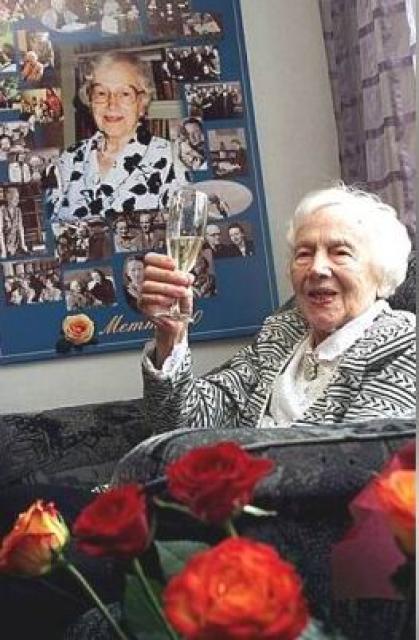
Lauristin remained committed to her ideals throughout her life. She passed away on June 25, 2005, at the age of 102. As the oldest resident of her city in her final year, she became a symbol of longevity and resilience.


