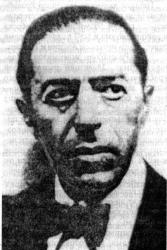
Oliver Cromwell
 Great Britain
- Biography of Oliver Cromwell
- Education and Marriage
- Political Involvement
- English Civil War
- Protectorate and Later Years
Biography of Oliver Cromwell
Early Life and Political CareerOliver Cromwell, a political and military leader, was born on April 25, 1599, in Huntingdon. The Cromwell family had established themselves as local elites since the Reformation and the subsequent closure of monasteries, which resulted in the confiscation of their properties by the crown. Oliver's great-grandfather, Richard Williams, adopted his uncle Thomas Cromwell's powerful surname, earning him the nickname "the hammer of the monks."

Education and Marriage
Cromwell received his education at the University of Cambridge between 1616 and 1617. In 1620, he married Elizabeth Bourchier. His father's death occurred in 1617.
Political Involvement
In 1628, Cromwell was elected as a member of parliament for Huntingdon. He participated in a dispute over the town charter of Huntingdon in 1630 and sold his property there, subsequently moving to St. Ives. In 1636, he relocated to Ely, where he inherited his uncle's house and estate. Cromwell was elected as a member of parliament for Cambridge in 1640 and actively participated in the early sessions of the Long Parliament.
English Civil War
The English Civil War officially began on August 22, 1642. Cromwell, along with his son-in-law Valentine Walton, organized an ambush on the royal escort in the suburbs of Cambridge. He fought under the command of the Earl of Essex in the Battle of Edgehill on October 22, 1642. Cromwell played a significant role in various military campaigns and battles, including the Siege of York in June 1644 and the Battle of Marston Moor on July 2, 1644. He also supported the military and financial reorganization of the Eastern Association army under the leadership of the Earl of Manchester.
Protectorate and Later Years
Following the end of the Civil War in May 1646, Cromwell returned to Westminster. In October 1646, he was granted an annual income of 2,500 pounds from confiscated property belonging to the Marquis of Winchester. In January 1647, Cromwell supported the Parliament's Resolution to cease communication with King Charles I. He played a crucial role in suppressing rebellions and uprisings, including the Penruddock uprising in May 1655. Cromwell dissolved the "Rump Parliament" and established the Barebone's Parliament in July 1653. On December 16, 1653, he became the Lord Protector of England. Cromwell led military expeditions in Ireland and Scotland and successfully defeated the Scottish army at the Battle of Dunbar in September 1650. He faced various political challenges during his rule, including the "Petition and Advice" and the Second Protectorate Parliament. Oliver Cromwell passed away on September 3, 1658.