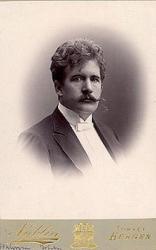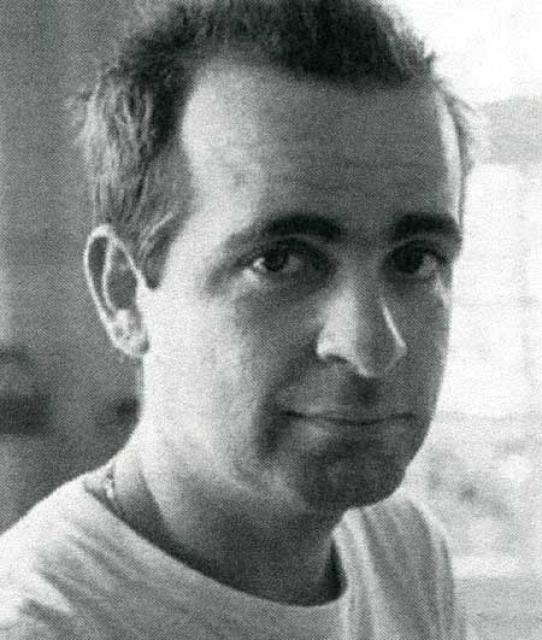
Olivier Greif
 France
- Early Life and Education
- International Acclaim and Collaboration
- Spiritual Influences and Artistic Breakthrough
- Return to Composition and Major Works
- Inspiration from Literature and Poetry
- Sudden Demise and Legacy
Early Life and Education
French composer and pianist Henri Dutilleux began his musical journey at the tender age of three on the piano. His passion for composition ignited at nine, leading him to the prestigious Paris Conservatory, where he honed his craft under renowned mentors such as Lucette Descaves, Tony Aubin, and Jean Hubeau.
International Acclaim and Collaboration
In 1969, Dutilleux pursued advanced studies at the Juilliard School under Luciano Berio, later assisting him with the production of his opera in Santa Fe. He returned to the Paris Conservatory in 1971, deepening his knowledge of orchestration and arrangement. Notably, he collaborated with pianist Katia Labèque, for whom he penned a series of captivating piano miniatures.
Spiritual Influences and Artistic Breakthrough
By the late 1970s, Dutilleux was profoundly influenced by the teachings of Sri Chinmoy. He transformed his spiritual insights into musical expressions, setting Chinmoy's poetry and texts to music and adopting the name Haridas ("Servant of God"). The period saw a prolific output of chamber works, primarily for piano.
In 1981, Dutilleux's chamber opera "N?" premiered to a lukewarm reception. Discouraged, he retreated from composition for nearly a decade, devoting himself to promoting Chinmoy's ideas in France.
Return to Composition and Major Works
Dutilleux's return to active musical life was marked by his acclaimed 1992 recording of Florent Schmitt's Piano Quartet with the esteemed Pasquier Trio and Roland Pidoux. In 1993, he unveiled "Letters from Westerbork," a poignant vocal cycle based on Etty Hillesum's letters and psalm excerpts. His Symphony No. 1 (1997) continued the Holocaust theme, using text by Paul Celan.
Inspiration from Literature and Poetry
Literature deeply influenced Dutilleux's later works. His String Quartet No. 3 ("Todesfuge," 1998) was initially inspired by Celan's poem but eventually replaced with Dylan Thomas's "And Death Shall Have No Dominion." The subsequent quartet explored James Joyce's "Ulysses."
His vocal compositions drew inspiration from poets such as Li Bo, John Donne, William Blake, and Paul Bowles. Dutilleux's notable legacy includes 23 piano sonatas, among which the Sonata-Requiem for cello and piano (1979) stands out.
Sudden Demise and Legacy
In 1994, Henri Dutilleux passed away unexpectedly, leaving behind a profound musical legacy. His numerous awards include the Grand Prix Musical of the Académie des Beaux-Arts and the Prix des Victoires de la Musique. His memory is honored by Pascal Amoyiel's "Sadhana" for voice and cello.