Olivier Messiaen
 France
- Early Life and Education
- Early Success and Religious Inspiration
- Exploration of Exotic Music and Ornithology
- Teaching and Musical Achievements
- Legacy and Musical Style
- Personal Life and Death
Early Life and Education
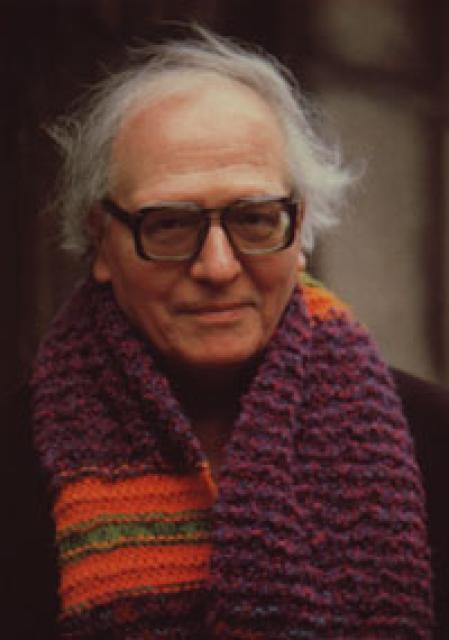
Olivier Eugène Prosper Charles Messiaen, known as Olivier Messiaen, was a French composer, organist, and ornithologist. He was born in Avignon, France in 1908. His family had a close connection to literature, as his mother, Cécile Sauvage, was a poet and his father, Pierre Messiaen, was an English teacher. From an early age, Messiaen showed a talent for music and at the age of 11, he entered the Paris Conservatoire, where he studied harmony with Jean Gallon, organ with Marcel Dupré, and composition with Paul Dukas.
Early Success and Religious Inspiration
Even as a student, Messiaen attracted attention with his compositions such as "Le banquet céleste" and "Les offrandes oubliées," which were inspired by religious themes. He once said, "When I was still a child, I was irresistibly drawn to the Catholic faith, to music, and to theater. But only the first two passions have remained with me until now. I strive to praise my faith, to be a musician - a Christian."

Exploration of Exotic Music and Ornithology
After completing his studies, Messiaen became fascinated with exotic musical cultures such as India, ancient Greece, and Japan. He also developed a passion for ornithology, which he maintained throughout his life. Messiaen incorporated bird songs into his compositions and compiled a detailed classification of them.

Teaching and Musical Achievements
In 1936, Messiaen began teaching at the Schola cantorum and École normale in Paris. He also co-founded "La jeune France" with André Jolivet, Daniel-Lesur, and Yves Baudrier. During World War II, Messiaen served in the French army and was captured by the Germans. While in a prisoner-of-war camp, he composed his famous "Quatuor pour la fin du temps" (Quartet for the End of Time), which was first performed by fellow prisoners. After his release in 1942, Messiaen returned to Paris and worked as an organist and a professor of harmony at the Paris Conservatoire.

Legacy and Musical Style
Among Messiaen's notable students were Pierre Boulez, Gérard Grisey, Henryk Górecki, Peter Donohoe, and Iannis Xenakis. He received numerous awards and honors, including the Ernst von Siemens Music Prize in 1975 and the Erasmus Prize in 1971. Messiaen's compositions, including "Trois petites liturgies de la presence divine," "La transfiguration du Notre Seigneur," and "Saint-François d'Assise," are widely recognized and admired. His musical style cannot be confined to a specific school or genre, as he always represented his independent, unique realm of music.
Personal Life and Death
Messiaen's first wife passed away in 1961, and he later married his student, pianist Yvonne Loriod. Olivier Messiaen died on April 27, 1992. His last composition was a concerto for flute, oboe, cello, and piano.