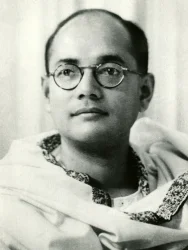
Omar al-Mukhtar
Omar al-Mukhtar was a teacher, religious leader and resistance commander who became a central figure in Libya’s struggle against Italian colonial rule. Known as the “Lion of the Desert,” he led Senussi fighters in Cyrenaica for years against a far larger occupying force. His capture and execution in 1931 failed to erase his influence; instead, he became a lasting symbol of Libyan independence and resistance to colonial domination.
A teacher shaped by the Senussi movement
Al-Mukhtar was born in 1858 in Cyrenaica, in what was then Ottoman Libya. Sources commonly place his birthplace at Zawiyat Janzur, near Tobruk. Orphaned at a young age, he was educated within the Senussi religious order, a Muslim movement with schools and lodges across North Africa. He studied at al-Jaghbub, a major Senussi center, and later worked as a Quran teacher and religious sheikh.
The Senussi order connected religious learning with community leadership. Al-Mukhtar’s years as a teacher helped him build trust among local communities and a close knowledge of the region’s terrain. He also gained earlier experience in resistance to French expansion in the Sahara.
Leading resistance in Cyrenaica
Italy invaded Libya in 1911, when the territory was under Ottoman rule. As Italian control spread, local resistance continued. In the 1920s, al-Mukhtar emerged as its leading commander in Cyrenaica, organizing mobile groups that used their familiarity with the mountains and desert to challenge Italian forces.
The campaign intensified after the Fascists took power in Italy. Colonial authorities launched a brutal effort to crush the resistance, including forced relocation of civilians and the construction of a barrier along the Egyptian frontier to cut fighters off from supplies and refuge. Al-Mukhtar’s forces faced overwhelming military pressure, yet he continued to resist for years, becoming a figure of both military defiance and spiritual authority.
Italian troops captured him in September 1931. After a brief military trial, he was sentenced to death. On September 16, he was hanged at the Suluq concentration camp in front of Libyan prisoners and other people forced to witness the execution. He was 73.
A national symbol
Al-Mukhtar’s death helped end organized Senussi resistance in eastern Libya, but it secured him a place in the country’s national memory. His courage, religious commitment and refusal to surrender made him a hero to Libyans and an emblem of anti-colonial struggle across the Arab and Muslim worlds.
His story has been told in books, commemorations and the 1981 film “Lion of the Desert,” in which Anthony Quinn portrayed him. The image of al-Mukhtar as an older fighter facing a modern empire has endured, reflecting both the human cost of colonial rule and the determination of those who resisted it.