Konrad Adenauer
 Germany
Biography of Konrad Adenauer
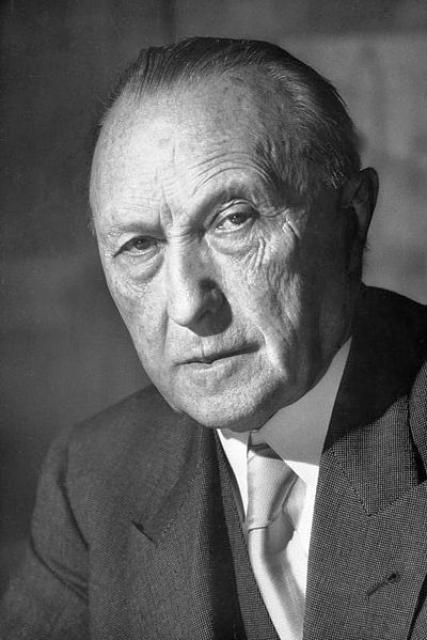
Konrad Adenauer was a German politician and the first Chancellor of post-war Germany from 1949 to 1963. He retired at the age of 87, making him one of the oldest heads of government in modern history. Adenauer was one of the founding members of the Christian Democratic Union (CDU) in 1946 and served as its chairman from 1950.
Adenauer had a long and distinguished political career. He served as the Oberbürgermeister (Lord Mayor) of Cologne from 1917 to 1933 and the Chairman of the Prussian State Council from 1920 to 1932. He also held positions on the supervisory boards of energy and coal companies, as well as the German Bank. However, he resigned from these positions in 1933 due to his uncompromising opposition to Hitler and Nazi ideology.
Adenauer was arrested by the Gestapo twice, in 1934 and 1944, for his unwavering opposition to the Nazi regime. After the end of World War II, Adenauer played a key role in the founding of the Christian Democratic Union and became its chairman in 1946. From September 1949 to October 1963, he served as the Federal Chancellor of West Germany.
Adenauer was known for his authoritarian leadership style, pragmatism, and his Christian ideals. He was extremely popular among the people and was affectionately referred to as "Der Alte" ("The Old Man"). His political philosophy was based on two pillars: the social market economy and the idea of a "new Germany in a new Europe". He believed in the importance of Christian ethics as the foundation of society and advocated for a limited role of the state, allowing individuals to take initiative in all aspects of life.
One of Adenauer's main achievements was the economic recovery of post-war Germany, often referred to as the "economic miracle". He implemented radical reforms, including the introduction of the new German currency and monetary reform, which led to a rapid increase in the gross national product, a decrease in unemployment, and an improvement in the standard of living.
Adenauer also played a crucial role in the international relations of West Germany. He worked towards improving Germany's international standing and strengthening its ties with former enemies, such as France. He signed the Paris Peace Treaties, which resolved post-war difficulties in European balance of power. He also supported the European integration movement and played a key role in Germany's accession to NATO in 1955.
Adenauer was committed to addressing Germany's historical guilt and promoting reconciliation. He took steps to improve relations with Israel, including the payment of reparations for the Holocaust. He believed in the importance of maintaining a strong stance against the Soviet Union and the German Democratic Republic (East Germany), while also seeking peaceful coexistence and detente.
Adenauer retired from politics in 1963, leaving behind a legacy of a transformed and prosperous West Germany. He was praised for his role in the country's economic recovery, his commitment to democracy, and his efforts to rebuild Germany's international reputation.