Oras Verne
 France
- Horace Vernet: Life and Legacy
- Diplomatic and Artistic Success
- Military Paintings and Patriotism
- Influence on Orientalism
- Monumental Paintings and Portraits
Horace Vernet: Life and Legacy
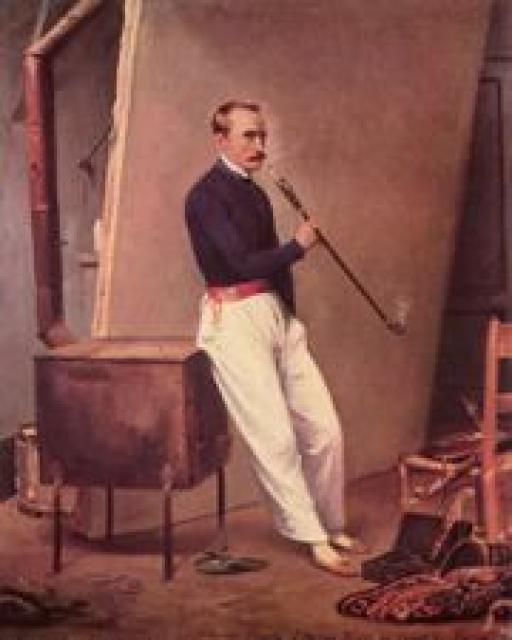
Early Life and EducationHorace Vernet was born into a renowned artistic family, the son of celebrated painter Carle Vernet. Following in his father's footsteps, he studied under his guidance, honing his skills at a young age.
Diplomatic and Artistic Success
Vernet's career soared both in the realms of art and diplomacy. He rose through the ranks of the French political elite, serving as a diplomat and Ambassador during the reigns of Napoleon Bonaparte and the Restoration. This elevated position granted him access to the highest echelons of society.
In 1829, Vernet was appointed director of the French Academy in Rome, a prestigious institution that played a significant role in his artistic development.
Military Paintings and Patriotism
Vernet gained immense recognition for his stirring battlefield paintings. He was commissioned by King Louis Philippe and Napoleon III to create monumental works depicting heroic victories, such as "The Taking of Tangiers." His compositions were vast and grand, capturing the chaos and glory of battle.
Vernet's paintings often portrayed fierce skirmishes amidst tempestuous landscapes, such as "Battle at Sea" (1825). He had a penchant for dramatic and exotic subjects, including the legendary "Mazeppa, Pursued by Wolves" (1826-1827).
Influence on Orientalism
Vernet's travels to North Africa had a profound impact on his work. His depictions of the region's landscapes and cultures played a pivotal role in the development of Orientalism, a popular artistic movement that romanticized the Eastern world.
Monumental Paintings and Portraits
Beyond his military paintings, Vernet was also an accomplished muralist. His decorative works adorned public spaces, such as the ceiling of the Egyptian Antiquities gallery in the Louvre (1827). He was also renowned for his portraits, capturing the likenesses of prominent figures like sculptor Bertel Thorvaldsen (1835).