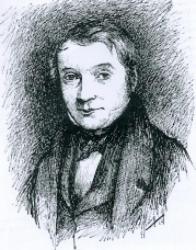
Oscar Drude
 Germany
- Oskar Drude: A Botanical Pioneer
- Academic Career
- Contributions to Botanical Geography
- Drude's Law of Habitat Constancy
- Plant Abundance Scale
- Plant Life Form System
- Floristic Kingdoms and Plant Zones
- Botanical Collaborations
- Legacy
Oskar Drude: A Botanical Pioneer
Early Life and EducationOskar Drude was born as a German botanist, ecologist, and geobotanist. He studied natural science and chemistry at the Collegium Carolinum in Braunschweig from 1870. In 1871, he enrolled at the University of Göttingen, where he earned his doctorate in 1874.
Academic Career
After graduating, Drude became a private lecturer in botany at the University of Göttingen in 1876. He served as an assistant to August Grisebach and later as a professor of botany at the Dresden Technical College from 1879 to 1921. In 1906-1907, he held the position of rector of the Dresden Technical University.
Contributions to Botanical Geography
Drude made significant contributions to botanical geography. He proposed a division of the Earth's vegetation into six botanical-geographic zones, or regions, based on climate. Additionally, he identified 14 floristic kingdoms, grouping them into boreal, tropical, and southern groups based on the composition and origin of their vegetation.
Drude's Law of Habitat Constancy
Drude established the "law of relative habitat constancy," which states that the characteristics of a plant community remain relatively stable over time, despite changes in environmental conditions.
Plant Abundance Scale
Drude introduced the plant abundance scale (Drude's scale or Hult-Drude scale), which uses a point system to estimate the number and projected cover of plant species. The scale ranges from 0.16% ("single") to 100% ("abundant").
Plant Life Form System
Drude presented his system of plant life forms in 1913. This system emphasized the relationship between plant form and climate, as well as the importance of biological traits. Drude identified several classes of plant formations, including forests, grasslands, and rock vegetation.
Floristic Kingdoms and Plant Zones
Drude identified 15 floristic kingdoms, which he grouped into several categories with distinct floristic characteristics. Concurrently, he proposed six plant zones based on floristic and climatic factors.
Botanical Collaborations
Drude collaborated with Engler and Prantl on their comprehensive botanical work. He authored treatments of the palm and umbellifer families.
Legacy
Oskar Drude is remembered as a pioneering botanist who made important contributions to plant geography, ecology, and the study of plant life forms. His legacy continues to inspire researchers and conservationists alike.