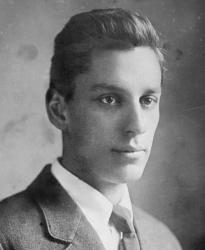
Osip Brik
- Osip Brik: A Literary Legacy
- Marriage and Artistic Circle
- Literary and Artistic Involvement
- Political and Literary Activism
- Avant-Garde Theatre and Propaganda
- Later Life and Legacy
Osip Brik: A Literary Legacy
Early Life and EducationOsip Brik was born in St. Petersburg, Russia, into a wealthy merchant family. Despite receiving a law degree, his true passion lay in literature.
Marriage and Artistic Circle
In 1912, Brik married Lilya Yurievna Kagan. This marriage brought him into contact with the avant-garde artist Vladimir Mayakovsky in 1915. Brik became a key figure in publishing and promoting Mayakovsky's works, including the poems "Cloud in Trousers" and "The Flute-Spine."
Literary and Artistic Involvement
From 1916 onwards, Brik dedicated himself to philology and journalism. He co-founded OPOYAZ (Society for the Study of Poetic Language) and participated in several left-wing art movements.
Political and Literary Activism
During the Russian Revolution, Brik briefly served in the Cheka secret police and was a member of the Bolshevik Party. He developed influential theories on social command, industrial art, and literature of fact. His novella "A Non-Fellow-Traveler" (1923) sparked significant controversy.
Avant-Garde Theatre and Propaganda
In 1926, Brik co-wrote the play "Radio-October" with Mayakovsky. Together, they also penned a series of literary manifestos.
Later Life and Legacy
Despite his active involvement in the literary scene, Brik gradually faded into obscurity during the 1930s. He continued to write articles and run a literary circle. Brik's works remained largely unpublished until the mid-1990s, but his influence on Russian literature remains significant.