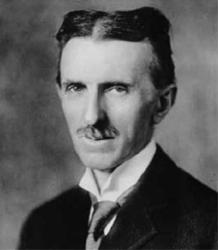
Oskar Kaybishev
 Russia
Early Life and Education
Oskar Akremovich Kaibyshev was born in 1939 in Moscow into a Tatar family. In 1962, he graduated from the Moscow Steel and Alloys Institute.
Professional Career
Upon graduation, Kaibyshev worked at the Ufa Motor Construction Plant from 1962 onwards. In 1967, he earned his candidate's degree and joined the Ufa Aviation Institute, where he became head of a department in 1969. In 1974, he defended his doctoral dissertation.
In 1987, Kaibyshev became the director of the Institute of Superplasticity of Metals under the USSR Academy of Sciences (later the Russian Academy of Sciences). From 1991 to 1994, he served as President of the Academy of Sciences of Bashkortostan.
Contributions to Science
Kaibyshev was a renowned scientist in materials science. He specialized in the fields of strength and plasticity of solids, structural materials, and forming processes. He established the universality of superplastic flow for all industrial alloys, including intermetallics and ceramics, and developed a physical theory of superplasticity.
Legal Troubles and Later Career
In 2005, Kaibyshev was accused by the Federal Security Service of transferring dual-use technologies to South Korea. He was subsequently removed from his position as director of the research institute. In 2006, he was convicted of espionage and sentenced to six years of conditional imprisonment, along with a three-month ban on holding leadership positions and a fine of 3,518,000 rubles.
Despite the legal setbacks, Kaibyshev continued to make significant contributions to science. His publications included 350 scientific papers and five monographs, while he also held 150 patents.