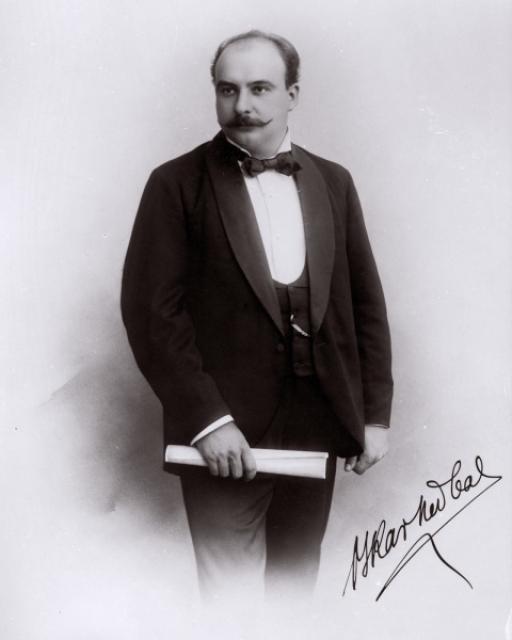
Oskar Nedbal
 Czech
CzechOskar Nedbal: Czech Violist, Conductor, and Composer
Oskar Nedbal was a Czech violist, conductor, and composer. He graduated from the Prague Conservatory, where he studied violin and composition, in 1891. During his final year, he trained under the guidance of Antonin Dvorak. In 1892, Nedbal was one of the founders of the Czech Quartet, in which he played the viola. From 1896, Nedbal began actively performing as a conductor, mainly with the National Theatre Orchestra.
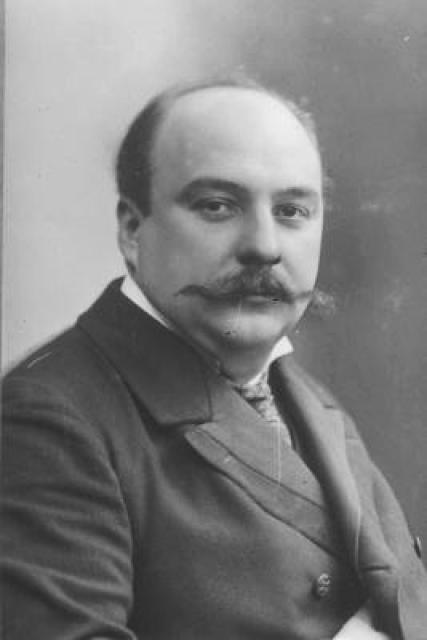
Early Career
In 1902, Nedbal conducted the premiere of his first ballet "The Tale of Honza" (Czech: Pohádka o Honzovi), which was later staged in Vienna under the title "Lazy Hans" (German: Der faule Hans). In 1906, due to a romantic relationship with the wife of his Czech Quartet colleague Karel Hoffmann, Nedbal was forced to leave the quartet and move from Prague to Vienna. He largely abandoned his performing career there and founded the Tonkünstler Orchestra, which he led until 1919. With this orchestra, he promoted Czech music in Austria and other countries. Nedbal's orchestra performed weekly Sunday concerts at the famous "Theater an der Wien," one of the main centers of Viennese operetta development. It was possibly this experience that led Nedbal to turn to this genre of musical theater. In 1910, his first operetta "The Immaculate Barbara" (Czech: Cudná Barbora) was premiered in Prague, followed by "Polish Blood" (German: Polenblut; 1913), "The Winemaker's Bride" (German: Die Winzerbraut; 1916), "The Beautiful Saskia" (German: Die schöne Saskia; 1917), "Erivan" (1918). "Polish Blood," with a libretto by Leo Stein based on Alexander Sergeyevich Pushkin's novella "The Peasant Girl," enjoyed particular popularity.
Later Years and Legacy
In 1919, after the dissolution of Austria-Hungary, Nedbal returned to Prague but could not find permanent work there. In 1923, he moved to Bratislava, where he became the artistic director of the Slovak National Theatre. He worked successfully in this position until 1930, when the economic crisis threatened the theater's bankruptcy. Newspapers accused Nedbal of the theater's critical situation and demanded that he repay the theater's debt with his own funds. In a troubled state of mind, he traveled to Zagreb to conduct a performance of his ballet "The Tale of Honza" and, on the evening before Christmas, jumped out of the window of the Zagreb Theater.
The theater in his hometown of Tabor is named after Nedbal. In 2006, his remains were reburied in Prague.



