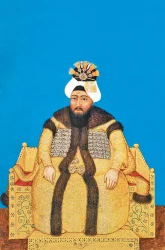
Osman III
Osman III was the 25th Ottoman sultan, ruling from 1754 to 1757 after succeeding his elder brother Mahmud I. He had spent most of his life confined within the palace, part of an Ottoman succession practice that kept potential heirs under close supervision. His brief reign was marked by changes at court, capable grand vizieral administration, and two major fires in Istanbul.
Early life and accession
Osman was born in 1699, the son of Sultan Mustafa II and Şehsuvar Kadın. After Mustafa’s deposition in 1703, Osman remained within the imperial palace. Like other princes who could claim the throne, he lived under confinement and surveillance for decades. This limited his experience of government before he became sultan late in life.
When Mahmud I died in December 1754 without an heir, Osman ascended the throne. His mother, Şehsuvar Sultan, became valide sultan, the influential mother of the reigning monarch. Osman relied on experienced officials to manage the state and appointed Koca Ragıp Pasha as grand vizier in 1757, near the end of his reign. Ragıp would remain in office under Osman’s successor and became one of the era’s most respected administrators.
Reign and events in Istanbul
Osman’s reign came during a relatively peaceful period in Ottoman foreign relations, following the Treaty of Belgrade in 1739. The court focused on domestic administration and ceremonial life. The construction of the Nuruosmaniye Mosque, begun under Mahmud I, was completed and opened during Osman’s reign. Its name, often understood as “Light of Osman,” reflected the new sultan’s patronage.
Istanbul suffered two serious fires during his rule, in 1754 and 1755, which caused extensive damage in the capital. These disasters required substantial rebuilding and added to the administrative challenges of a short reign. The sultan’s personal preferences and court decisions affected palace life, though accounts of his character often come from later chroniclers and should be treated cautiously.
Death and legacy
Osman III died in Istanbul on 30 October 1757, after less than three years on the throne. He had no surviving children, so his nephew Mustafa III succeeded him. His mother’s long period as valide sultan ended with his death.
Osman’s reign is less remembered for military campaigns than for its palace politics and the circumstances of his accession. The decades he spent confined before becoming sultan illustrate the costs of the Ottoman kafes system, which protected the dynasty from succession wars but left princes isolated from ordinary political life. His brief rule also saw the capital recover from major fires and complete one of its notable imperial mosques.