Otto I
A leading Saxon family
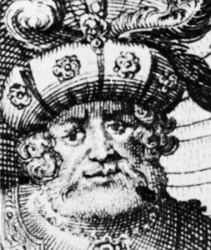
Otto, later called “the Illustrious,” was a powerful Saxon noble who held the duchy of Saxony from 880 until his death in 912. He belonged to the Liudolfing family, later known as the Ottonian dynasty after the rise of his grandson Otto the Great. Otto I of Saxony should not be confused with that later emperor, who was born near the end of his grandfather’s life.
Otto was a son of Liudolf, a prominent Saxon count, and Oda. When his elder brother Brun died fighting Danish forces in 880, Otto succeeded him as the leading member of the family and duke of Saxony. The surviving evidence does not reveal much about his private character, but royal charters and later chronicles show that he held authority over a broad area of Saxony and neighboring Thuringia.
Duke and regional power
Otto’s position was strengthened by landholding, family connections, and service to the Carolingian rulers of East Francia. Charters from the period place him in a county in southern Thuringia and later describe him with the title of margrave. He also served as lay abbot of Hersfeld, a role that linked political authority with the administration of a major monastery.
Saxony faced pressure from Danish armies and neighboring Slavic peoples during Otto’s lifetime. His brother’s death in the fighting of 880 illustrates the dangers of defending the region’s borders. Otto maintained Saxon power while remaining in a workable relationship with East Frankish kings such as Louis the Younger and Arnulf. Later writers portrayed his authority as so extensive that he could act almost like a king within Saxony, though his power still operated within the wider East Frankish realm.
The crown he reportedly declined
After the death of the young king Louis the Child in 911, the East Frankish kingdom needed a successor. A later Saxon chronicler, Widukind of Corvey, says that Otto was offered the kingship but declined because of his advanced age and recommended Conrad of Franconia instead. The story reflects Otto’s formidable reputation, though historians treat the details cautiously because Widukind wrote decades after the event.
Conrad was elected king, and Otto continued as duke until his death on 30 November 912. His son Henry succeeded him in Saxony and was elected king of East Francia in 919, becoming known as Henry the Fowler. Henry’s son Otto later became emperor, extending the family’s power across much of central Europe.
Legacy
Otto’s own life is less documented than the careers of his royal descendants, but his long rule helped establish the political weight of the Liudolfing family. He built a durable regional base in Saxony, connected his house to the Carolingian monarchy, and passed authority to a son capable of claiming the kingship. His legacy lies in this transition from powerful duchy to royal dynasty, a path that shaped the political history of tenth-century Germany.