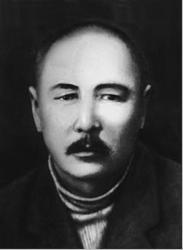
Otto Rahn
 Germany
- Early Life and Education
- Obsession with Catharism
- Affiliation with the SS and 'Ahnenerbe'
- Literary Works and Controversial Beliefs
- Disillusionment and Suicide
- Literary Legacy
Otto Rahn: An Eclectic Life of Mysticism, Archaeology, and Controversy
Early Life and Education
Otto Wilhelm Rahn was born into a devout family in Michelstadt, Germany, on February 18, 1904. After completing his secondary education at humanistisches Gymnasium in Bingen am Rhein and Landgraf Ludwig Gymnasium, he pursued studies in law, German philosophy, and history at the University of Giessen from 1922 to 1926.
Obsession with Catharism
During his school years, Rahn developed a fascination with the history of the Cathars, an heretical religious movement that flourished in medieval Europe. This interest evolved into his own personal religious beliefs. From 1928 to 1932, Rahn embarked on extensive travels throughout France, Spain, Italy, and Switzerland, seeking out Cathar remains and artifacts. Notably, he spent time in the Languedoc region, near the ruins of Montsegur castle, the Cathars' last stronghold.
Affiliation with the SS and 'Ahnenerbe'
Returning to Germany in 1933, Rahn settled in Berlin, where his research caught the attention of Heinrich Himmler, the head of the SS who was known for his interest in religious mysticism. Rahn became a member of the "Ahnenerbe" research society and joined the SS in 1936, quickly rising to the rank of Unterscharführer. That same summer, he participated in an expedition to Iceland.
Literary Works and Controversial Beliefs
Rahn's extensive research culminated in two books: "Kreuzzug gegen den Gral" (1933; translated as "Crusade Against the Grail") and "Luzifers Hofgesind" (1937; translated as "Lucifer's Court"). These works reflected his unique perspectives on Catharism, medieval Grail legends, and Christian mysticism.
Disillusionment and Suicide
In 1937, Rahn fell into disfavor and was sent to the Dachau concentration camp as a disciplinary measure. Disillusioned with Nazi policies, he eventually submitted his resignation from the SS in late 1938. According to the official account, Rahn committed suicide by ingesting cyanide on March 14, 1939, on Mount Kufstein in the Tyrolean Alps. His death remains shrouded in mystery and speculation.
Literary Legacy
Otto Rahn's life and work have been the subject of numerous literary adaptations, including the trilogy "Look into the Eyes of a Monster," "Hyperborean Plague," and "The Ecciesiastes' March" by Andrei Lazarchuk and Mikhail Uspensky. His enigmatic personality and controversial beliefs continue to fascinate readers to this day.