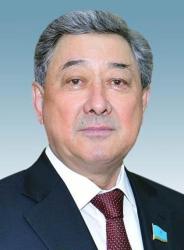
John Raleigh Mott
 USA
USA- Early Life and Education
- Joining the YMCA and Student Volunteer Movement
- Leading the Intercollegiate YMCA
- Establishing the World Student Christian Federation
- Missionary Work and the Edinburgh Conference
- Wartime Relief and the National War Work Council
- Post-War Involvement
- Nobel Peace Prize and Legacy
Early Life and Education
John Raleigh Mott was born on January 25, 1865, in Livingston Manor, New York, as the third child and only son of John Stitt Mott and Elmira Dodge. In 1867, the family moved to Postville, Iowa, where his father established a prosperous hardware store and served as mayor.
Growing up in a Methodist home filled with books, Mott developed a deep Christian faith and experienced a conversion at the age of 13. At 16, he enrolled in Cornell College in Mount Vernon, Iowa, where he excelled in history, literature, and oratory.
Joining the YMCA and Student Volunteer Movement
In 1885, Mott transferred to Cornell University in Ithaca, New York. There, he became involved in the Young Men's Christian Association (YMCA). After hearing a lecture by the British evangelist D. Kajonastudd in 1886, Mott resigned his ambitions for politics and law and dedicated himself to Christian ideals.
As president of the Cornell YMCA, Mott expanded the organization and raised funds for a new campus building. He graduated in 1888 with a degree in history, political science, and philosophy.
Leading the Intercollegiate YMCA
Mott became the National Secretary of the YMCA's Intercollegiate Committee and served in this role for 27 years. He traveled extensively throughout the United States and Canada, recruiting new members and establishing YMCA chapters in colleges.
He founded the Student Volunteer Movement for Foreign Missions, which sent thousands of American and Canadian volunteers to spread their faith to students worldwide. In 1891, Mott married Leyla Ade White, an English teacher, and they had four children.
Establishing the World Student Christian Federation
Mott's efforts led to the formation of national student organizations in India, China, Japan, Australia, New Zealand, the Middle East, and Europe. He possessed an extraordinary ability to connect with students and inspire them to join his cause.
Under Mott's leadership, the YMCA united young Christians in Britain and Sweden to create the World Student Christian Federation. Its first conference in Vadstena, Sweden, in 1895 brought together representatives from 10 countries.
Missionary Work and the Edinburgh Conference
In 1895, Mott embarked on a two-year tour to establish student organizations in various countries. He advocated for Christian ideals and missionary work through books, articles, and pamphlets.
Mott presided over the World Missionary Conference in Edinburgh, Scotland, in 1910. As chairman of its Continuation Committee, he traveled to Asia, attending regional meetings and promoting student organizations. Despite conservative opposition, he insisted on opening missionary opportunities to students of all races and nationalities.
Wartime Relief and the National War Work Council
During World War I, Mott attempted to maintain communication between YMCA groups in Europe. After facing challenges, he shifted his focus to providing aid to prisoners of war and refugees through the Continuation Committee.
In 1915, Mott was elected as head of the American YMCA and General Secretary of the National War Work Council. He helped raise nearly $200 million for YMCA programs. Mott served on President Wilson's Mexican Commission and traveled to Russia with a special delegation in 1917.
Post-War Involvement
After the war, Mott attended the Paris Peace Conference, where he advocated for religious freedom. The World Missionary Conference of 1921 was transformed into the International Missionary Council, and Mott became its chairman.
Throughout the 1920s and 1930s, he traveled extensively on behalf of the Council and the World's YMCA Committee. In 1926, Mott left the American YMCA to lead the worldwide organization.
Nobel Peace Prize and Legacy
During World War II, despite his advanced age, Mott tirelessly organized fundraising campaigns for YMCA programs aiding prisoners of war. He shared the 1946 Nobel Peace Prize with Emily Greene Balch.
In his Nobel lecture, Mott emphasized the need to mobilize "constructive forces in the world" amidst the transition period. He outlined a plan for "a more aggressive and more successful warfare against the age-long enemies of mankind – ignorance, poverty, disease, discord, and sin."
Mott spent his final ten years in retirement in Orlando, Florida. He married Agnes Peter in 1953, four years after the death of his first wife. Mott passed away in 1955.
Elihu Root praised Mott's "great personal force and single-minded devotion to the cause of peace... his influence came from no offices that he held; rather it came from his wandering over the earth, creating and strengthening devotion to the fundamental principles on which peace depends."