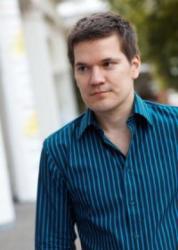
Pascal Bruckner
 France
- The Life and Work of Michel Foucault
- Early Life and Education
- Academic Career
- Intellectual Contributions
- Later Career and Legacy
The Life and Work of Michel Foucault
Michel Foucault was a renowned French philosopher, social theorist, and literary critic born on October 15, 1926. His interdisciplinary approach and provocative ideas revolutionized the fields of philosophy, history, and the social sciences.
Early Life and Education
Foucault spent his formative years in various countries, including Austria, Switzerland, and France. He attended the prestigious Lycée Henri IV in Paris and later pursued higher education at the University of Paris I (Sorbonne), University of Paris VII (Diderot), and the École Pratique des Hautes Études. In 1975, he completed his doctoral thesis on sexuality and emancipation in the utopian thought of Charles Fourier under the supervision of Roland Barthes.
Academic Career
Foucault's academic journey spanned both France and the United States. He held teaching positions at universities such as the University of Clermont-Ferrand, the University of Tunis, and the University of California, Berkeley. In the 1970s, he became associated with the "nouveaux philosophes," including André Glucksmann.
Intellectual Contributions
Foucault's work is characterized by its critical analysis of power relations, knowledge, and discourse. His most influential books include "Madness and Civilization" (1961), "The Birth of the Clinic" (1963), "Discipline and Punish" (1975), and "The History of Sexuality" (1976-1984). Through these works, he argued that knowledge is not objective but constructed and shaped by power dynamics within society. He also explored the ways in which power operates through institutions and discourses and how it affects individuals and their subjectivities.
Later Career and Legacy
Foucault's intellectual influence continued to grow throughout his later career. He became a professor at the prestigious Institut d'Études Politiques de Paris (Sciences-Po), where he taught until his untimely death in 1984. Posthumously, his unfinished works on biopolitics and ethics have been published, adding further depth and complexity to his legacy.
Michel Foucault's groundbreaking insights and critical approach continue to inspire and challenge contemporary thinkers in fields as diverse as philosophy, sociology, psychology, and political science. His work has had a profound impact on our understanding of power, knowledge, and the human condition.