Patrice Mac-Mahon
 France
Biography of Patrice MacMahon
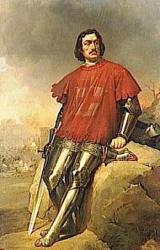
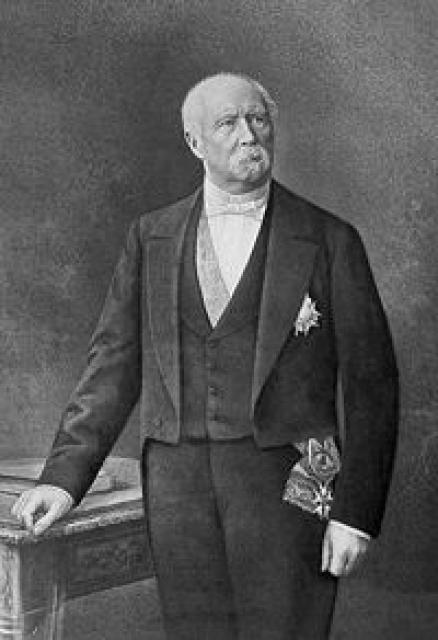
Patrice MacMahon was a French military leader and political figure, serving as a Marshal of France. Born into an ancient Irish Catholic family that had settled in France, he attended Jesuit college and the Saint-Cyr Military Academy. MacMahon joined the cavalry and served diligently under various regimes.
In the 1830s, he was stationed in Algeria and rose to the rank of brigadier general. In 1855, while commanding a division in the Crimean War, he captured the Malakhov Kurgan and was granted the title of senator. MacMahon was the sole senator who opposed a proposed law on extraordinary security measures following the Orsini assassination attempt in 1858.
Appointed as the Commander-in-Chief of all naval and land forces in Algeria in 1858, MacMahon later commanded a corps during the Austro-Prussian War in 1859. He played a crucial role in the Battle of Magenta by launching a timely attack on the Austrian right flank, saving the emperor from captivity and securing victory. For his military achievements, he was made a Marshal and Duke of Magenta. MacMahon also distinguished himself in the Battle of Solferino.
In 1861, he served as an extraordinary ambassador for Napoleon III at the coronation of Wilhelm I in Königsberg. From 1864 until 1870, MacMahon was again appointed as the head of the administration in Algeria, where his ineffective governance and lack of initiative exacerbated the dire situation. He prepared the grounds for a dangerous uprising among the indigenous population, but the Franco-Prussian War forced the government to recall him from Algeria, shifting the responsibility for quelling the rebellion onto others.
During the 1870 war, MacMahon's name became associated with two devastating defeats of the French army: at Wissembourg, where he lost half of his corps, and at Sedan. MacMahon later claimed that he recognized the folly of concentrating the army near Sedan but lacked the independence to defend his opinion. Wounded, he handed over command to General Ducrot and then to General Wimpffen, thus escaping the disgrace of capitulation but not captivity.
Upon his return to France, MacMahon led government forces during the siege of Paris by the Communards. During President Thiers' term, MacMahon's role shifted from being solely a soldier to becoming a politician, as three rival monarchist parties rallied around him as they sought a successor to Thiers. On May 24, 1873, MacMahon was elected President of the republic.
His presidency marked a reactionary period against Thiers' policies, with mass dismissals of prefects and officials for their republican beliefs and restrictions on freedom of assembly and clubs. Despite this, monarchists' intrigues to restore the monarchy under MacMahon's patronage failed due to their internal divisions and the stubbornness of Count Chambord. However, MacMahon refused to abandon the tricolor flag.
In November 1873, his powers were extended for seven years. In 1875, MacMahon strongly opposed the adoption of a republican constitution by the National Assembly. In 1877, he agreed to the formation of a hostile cabinet led by Jules Simon and allowed strong government pressure during the elections, but it did not succeed. Although the new chamber had a significant minority of monarchists and a special group of "MacMahonists," the majority remained republican.
After a two-year struggle with the chamber, MacMahon relinquished power in January 1879. He lived as a private individual in his castle near Montargis, where he published a book titled "L'armee de Versailles, rapport officiel" (Paris, 1891).