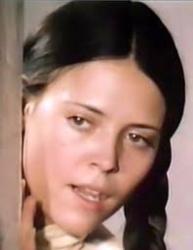
Patricia Rhomberg
 Austria
Patricia Rhomberg became one of the best-known faces of German-language adult cinema in the 1970s through a short run of films and one signature role. An Austrian performer from Vienna, she is most closely associated with the 1976 feature Josefine Mutzenbacher – Wie sie wirklich war, a period film that later circulated in the United States as Sensational Janine.
From Vienna to the screen
Rhomberg was born in Vienna on September 15, 1953. She entered film in the mid-1970s, working with German director Hans Billian. Her early credits included Im Gasthaus zum scharfen Hirschen, a 1975 production also released under the title Bienenstich im Liebesnest. Film listings from the period show her in several of Billian’s projects, including short works as well as longer features.
Her career unfolded while West German adult cinema was developing a more recognizable feature-film market. Productions of the period often combined genre storytelling with adult material, and Rhomberg’s screen work was part of that shift. Her presence was particularly associated with an accessible, naturalistic acting style, which helped set her apart from the more anonymous performers appearing in short-format films.
The role that defined her career
Rhomberg’s most famous role came in 1976, when she played the title character in Josefine Mutzenbacher – Wie sie wirklich war. Directed by Billian, the film adapted the erotic novel published anonymously in 1906 and placed its story in turn-of-the-century Vienna. The release became a landmark title within German adult cinema and brought Rhomberg wider recognition. When it reached American audiences in 1979, it was retitled Sensational Janine.
The film’s visibility made the actress’s name closely tied to the character. Later installments in the series continued without her, and other performers took on the role. Rhomberg appeared in further productions during the decade, including Die Wirtin von der Lahn and Kasimir der Kuckuckskleber, but none displaced the 1976 feature as the work most associated with her.
A brief, distinctive filmography
Rhomberg’s on-screen career was concentrated in the mid-to-late 1970s, and sources list a relatively small body of work compared with the stars of longer-running film careers. That brevity has helped give her surviving films a distinct place in the era’s cinema history: her image is closely bound to a particular moment in West German filmmaking and to one production that traveled beyond its original market.
Her legacy rests less on a long list of roles than on the lasting recognition of a single performance. As the lead in a film that became a cult reference point for adult cinema, Rhomberg remains a recognizable figure of 1970s European film, remembered for a short career that left a clear mark on the genre.