
Paul Alexander Baran
 USA
USABiography of Paul Alexander Baran
Paul Alexander Baran was an American economist who made significant contributions to the field of economics. He was born in the Russian city of Nikolaev, where his father was a member of the Menshevik party. In anticipation of the upcoming unrest in the country, Baran's family moved to Vilna and later to Berlin. At a young age, Baran's parents returned to Moscow, leaving him in Germany to continue his education.
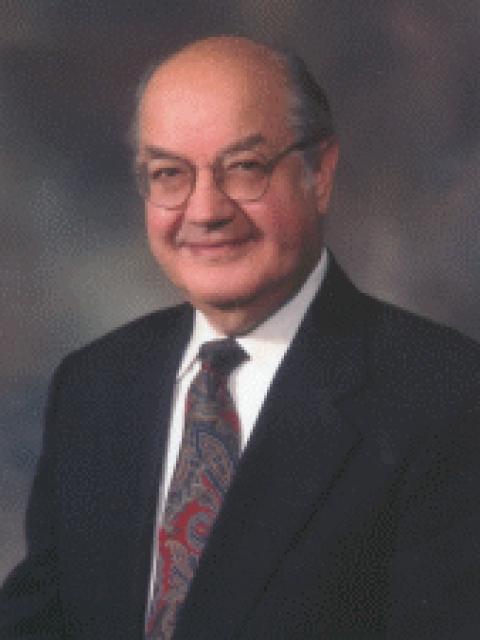
In 1926, Baran enrolled at the Plekhanov Institute in Moscow, but he did not stay in Russia for long. After returning to Germany, Baran joined the Frankfurt School Institute for Social Research. It was here, under the guidance of Emile Lederer, that he wrote his dissertation. Baran developed a critical approach to the concept of "economic surplus" and analyzed the economies of several third world countries using this new concept. He published his findings in his book "The Political Economy of Growth" and later in the influential work "Monopoly Capital: An essay on the American economic and social order".
During his career, Baran faced many challenges due to political unrest. When the Nazis came to power in Germany, he first moved to Paris, then to the Soviet Union, and finally settled in Vilna. Just before the German invasion of Poland, Baran emigrated to the United States, where he attended Harvard University and earned a master's degree. Due to financial constraints, he had to work in various government agencies such as the Brookings Institution, the Office of Price Administration, and the Office of Strategic Services.
Under the guidance of John Kenneth Galbraith, Baran worked in post-war Germany and Japan, compiling strategic intelligence reports. He also worked for the United States Department of Commerce and the Federal Reserve Bank of New York and lectured at George Washington University. Gradually, Baran was able to improve his financial situation and return to academic work. From 1949, he taught at Stanford University and wrote a column for the journal "Monthly Review" on education and enlightenment.
In 1960, Baran visited Cuba with the editors of "Monthly Review", Paul Sweezy and Leo Huberman. In 1962, he traveled to Moscow, Iran, and Yugoslavia. His research on various economic systems led Baran to write his seminal work "Monopoly Capital: An essay on the American economic and social order", which he co-authored with Sweezy. Unfortunately, Baran passed away in 1964 from a heart attack, but Sweezy managed to complete the book on his own.


