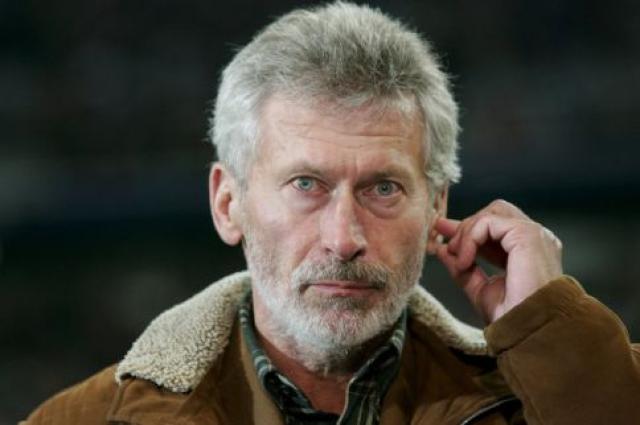
Paul Braytner
 Germany
- Early Life and Football Career
- World Cup Success and Controversies
- Conflict at Bayern Munich and Transfer to Real Madrid
- Spanish Adventure and Return to Germany
- Return to Bayern Munich
- Second World Cup and Retirement
- Legacy
Early Life and Football Career
Born on September 5, 1951, in Kolbermoor, Germany, Paul Breitner began his football journey in his hometown. He played for local clubs before joining ESV Freilassing in 1970. His exceptional talent caught the attention of scouts, and in 1970, he was brought to Bayern Munich as a youngster.
Breitner's rise in Bayern Munich was meteoric. Guided by football legend Franz Beckenbauer, he quickly established himself as a key player in the star-studded squad that dominated German and European football in the early 1970s. He played a pivotal role in Bayern Munich's triumphs, including the European Cup victory in 1974 and the German league championships in 1972, 1973, and 1974.
World Cup Success and Controversies
As a member of the West German national team, Breitner showcased his brilliance at the 1974 FIFA World Cup. Despite playing as a left-back, he scored three goals, including a stunning strike against Chile. His sensational goal in the final match, a thunderbolt from 30 meters, remains one of the most iconic moments in World Cup history.
Off the pitch, Breitner was known for his outspoken nature. He often criticized the German Football Association (DFB) and the commercialization of football. His unconventional views and political sympathies earned him the nicknames "Maoist" and "Red Paul."
Conflict at Bayern Munich and Transfer to Real Madrid
Breitner's confrontational personality eventually clashed with Bayern Munich's leadership. In 1974, he was sold to Real Madrid for 1.4 million marks following a public dispute with the club president.
Spanish Adventure and Return to Germany
In Madrid, Breitner enjoyed moderate success. He won two La Liga titles with Real Madrid but failed to make a significant impact in Europe. After three seasons, he returned to the German Bundesliga in 1977, joining Eintracht Braunschweig, where he struggled to find consistency.
Return to Bayern Munich
In 1979, Breitner re-joined Bayern Munich, where he rediscovered his form and became an integral part of the team alongside rising star Karl-Heinz Rummenigge. Together, known as "Breitnigge," they led Bayern Munich to the Bundesliga title in 1980 and 1981.
Second World Cup and Retirement
After initially retiring from international football, Breitner returned to the German national team for the 1982 FIFA World Cup, primarily due to financial considerations. He scored Germany's only goal in the 3-1 defeat to Italy in the final, becoming only the third player to score in two World Cup finals.
On January 10, 1983, Breitner announced his retirement from football, ending a remarkable career marked by both brilliance and controversy.
Legacy
Paul Breitner is remembered as one of the most iconic and polarizing figures in German football history. His exceptional talent on the pitch and outspoken nature off it left an enduring impact on the game. Despite his controversial reputation, his contributions to Bayern Munich and the West German national team remain indisputable.