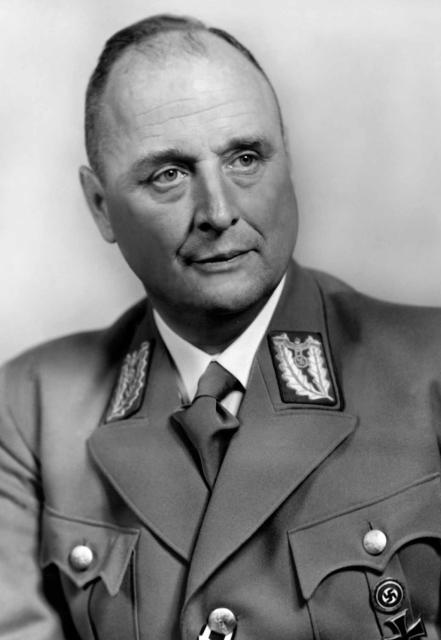
Paul Giesler
 Germany
Biography of Paul Giesler
Paul Giesler, a member of the NSDAP, served as the Premier of Bavaria from November 2, 1942, to April 28, 1945. He was a fervent supporter of Adolf Hitler's ideas and wielded his power with incredible efficiency, especially during the last years of the war when his authority in Bavaria was almost unlimited. Despite being an architect by profession, Giesler became one of the prominent party speakers and later rose to become the leader of the stormtrooper units and a local division of the NSDAP. He miraculously escaped arrest and death during the Night of the Long Knives. Giesler participated in the Polish and French campaigns and only managed to hold a significant position in the party in 1941, thanks to the insistence of Martin Bormann. He was appointed as the Gauleiter of South Westphalia and later Munich and Upper Bavaria. Following Ludwig Siebert's death, Giesler also became the Prime Minister of Bavaria and occupied multiple ministerial posts as the war progressed. In Munich, Giesler gained notoriety for his opposition to women's right to higher education, which led to student protests. Additionally, he achieved a resounding victory over the student movement 'White Rose'. In April 1945, Giesler held the position of Reich Commissioner for Defense and brutally suppressed the uprising of the 'Freiheitsaktion Bayern' movement in Munich, led by Captain Rupprecht Gerngroß, using SS troops. However, Giesler never had the opportunity to assume his appointment as Reich Minister of the Interior, as Allied forces were advancing on all fronts. Rumors circulated that Giesler was planning to murder the surviving prisoners of the Dachau concentration camp. Karl von Eberstein claimed that Giesler ordered him to execute 25,000 people, but Karl refused and presented Giesler with a command from Heinrich Himmler to surrender the camps without a fight. On April 20, Giesler dismissed Eberstein on the orders of Bormann for "defeatism". With Nazi Germany's final days approaching, this incident became one of the last opportunities for Giesler to exercise his power. On May 8, 1945, the Nazis surrendered, and fearing the arrival of Allied forces, Giesler and his wife took their own lives.


