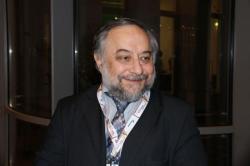
Paul Keres
 Finland
- Biography of Paul Keres
- Early Life and Career
- Achievements and Missed Opportunities
- Later Life and Legacy
Biography of Paul Keres
Paul Petrovich Keres was born on January 7, 1916, in Narva, Estonia. He was an Estonian chess grandmaster and one of the strongest chess players from 1930 to 1960. Keres was also a three-time champion of the USSR and a merited master of sports of the USSR.

Early Life and Career
Keres first learned about chess from his father and his brother, Harald. Due to a lack of chess literature in his small town, he compensated by solving chess puzzles from a weekly newspaper and even compiled a handwritten collection of nearly a thousand games. In the early stages of his career, Keres was known for his brilliant and aggressive playing style.

He became a three-time champion of Estonia in 1935, winning against Gunnar Friedemann. Keres also represented Estonia at the 6th Chess Olympiad in Warsaw in 1935, where his daring style of play impressed many and he began to be seen as a rising star.

Achievements and Missed Opportunities
In 1938, Keres won the prestigious AVRO Tournament, which led to negotiations for a World Championship match against Alexander Alekhine. However, the match never took place due to the outbreak of World War II. After the war, Keres finished second in the Candidates' Tournament four times in a row.
Throughout his career, Keres had a positive score against three World Champions - Max Euwe, Jose Capablanca, and Mikhail Tal. He also defeated nine other World Champions in individual games and drew Anatoly Karpov. Due to his numerous achievements, Keres is considered one of the strongest chess players never to have become World Champion, earning him the nickname "Crown Prince of Chess."
Later Life and Legacy
Keres passed away at the age of 59 from a heart attack while traveling from a tournament in Vancouver, Canada, back to his homeland of Estonia. His funeral in Tallinn was attended by over 100,000 people, including Estonian leaders and FIDE President Max Euwe, Keres' old friend and rival.
To this day, chess tournaments in memory of Keres are held annually in Vancouver and Tallinn. Streets in Tallinn and his hometown of Narva are named after him, and a monument was erected in his honor on Tõnismägi Hill in Tallinn. In 2000, Keres was elected the Estonian Athlete of the Century.