Paul Strand
 USA
USA- Paul Strand: Pioneer of Modern Photography
- Early Life and Influences
- Breaking Conventions: 'Pure Photography'
- The Photo League and Social Activism
- Filmmaking and Recognition
- Exile and French Years
- Personal Life
- Legacy and Influence
Paul Strand: Pioneer of Modern Photography
Paul Strand, an American photographer, played a pivotal role in establishing photography as an art form in its own right.
Early Life and Influences
Born in New York City in 1890 to Bohemian immigrants, Paul Strand developed a passion for photography at the age of 14. Under the tutelage of Lewis Hine, he mastered the technical aspects of photography. Subsequently, Alfred Stieglitz, the master photographer, guided him in the artistic nuances of the medium. Stieglitz encouraged Strand to pursue photography as a lifelong endeavor, sparking a profound shift in his artistic outlook.
Breaking Conventions: 'Pure Photography'
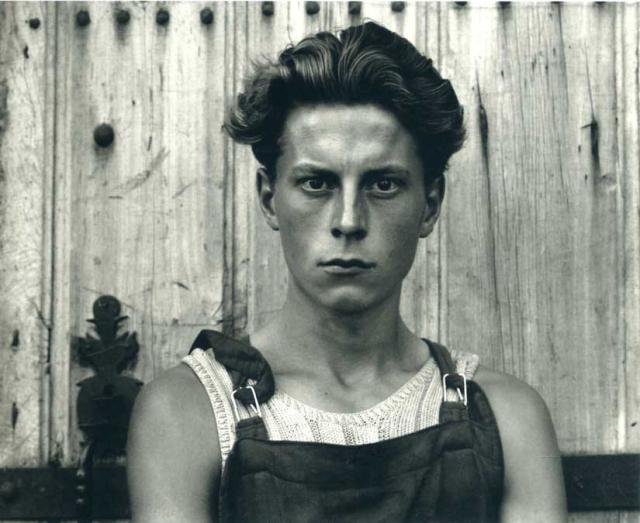
Strand became a proponent of 'straight photography,' rejecting the popular pictorialist style that emulated paintings. He believed that photography possessed inherent artistic value and should not attempt to imitate other art forms. Strand's focus on capturing everyday objects, such as car details, tree fragments, and rocks, paved the way for other photographers to follow suit.
The Photo League and Social Activism
Along with Edward Hopper, Strand co-founded the Photo League, a collective of photographers who aimed to leverage their art to influence social and political issues. His interest in capturing urban landscapes and social scenes reflected his commitment to documentary photography.
Filmmaking and Recognition
Strand's artistic endeavors extended beyond photography. In 1921, he directed 'Manhatta' (Manhattan), a film showcasing the architecture of New York City. Notable cinematic projects included 'The Plow That Broke the Plains' (1936) and 'Native Land' (1942). In 1946, the Museum of Modern Art in New York City held a major retrospective of Strand's work.
Exile and French Years
The Photo League's activities drew the attention of the House Un-American Activities Committee, leading to the blacklisting of its members. In 1949, Paul Strand was forced to leave the United States and relocate to France. He settled in Orgeval and spent the next 27 years there. His renowned photo album 'La France de Profil' (1952) depicted the country's diverse landscapes and people.
Personal Life
Strand married Rebecca Salsbury, a painter, in 1922. They later divorced, and in 1935, he married Virginia Stevens. He divorced Stevens in 1949 and married Hazel Kingsbury in 1951, a union that lasted until his death.
Legacy and Influence
Paul Strand passed away in Paris on March 31, 1976. His six-decade career spanned multiple genres, capturing subjects from America to Europe and Africa. Alongside Alfred Stieglitz and Edward Weston, Strand is credited with establishing photography as a respected art form, inspiring countless artists and photographers to come.