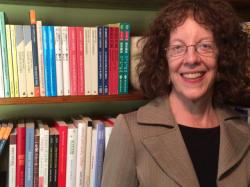
Paul Watzlawick
 USA
USA- Early Life and Education
- Academic Pursuits and Emigration to the U.S.
- Clinical Practice and Theoretical Contributions
- Pioneering the Pragmatics of Communication
- Popularizing Psychological Concepts
- Legacy and Impact
Early Life and Education
Paul Watzlawick, an Austrian-American psychotherapist and psychologist, was born into an affluent family in Vienna, Austria. He attended a prominent private high school, where his interest in psychology and psychiatry sparked.
Academic Pursuits and Emigration to the U.S.
Watzlawick pursued his studies at the University of Ca' Foscari in Venice, earning a degree in Philology and Philosophy. He later worked in Switzerland but decided to dedicate his life to research, as his financial situation allowed him to do so. In 1960, he accepted a position at the Mental Research Institute in Palo Alto, California, under the mentorship of Gregory Bateson.
Clinical Practice and Theoretical Contributions
Watzlawick's work focused on social psychology. Through his clinical practice, he observed and analyzed the problems faced by his patients, which formed the basis for his numerous books. His writings are characterized by an abundance of relatable examples, making them accessible to lay readers.
Pioneering the Pragmatics of Communication
In 1967, Watzlawick published "Pragmatics of Human Communication," offering practical advice for improving interpersonal relationships. He went on to become a professor at Stanford University in 1976.
Popularizing Psychological Concepts
Watzlawick's book "How to Be Unhappy Without Really Trying" (1976) became a bestseller, presenting humorous "bad advice" that ironically illuminated psychological mechanisms leading to stress and unhappiness. Through his use of humor, he conveyed the central message that happiness is a personal responsibility.
Legacy and Impact
Watzlawick applied a systemic approach to the theory of interpersonal communications and was one of the founders of radical constructivism. His contributions have had a profound impact on fields such as family therapy, communication studies, and psychology. Through his writings, he has left a lasting legacy of accessible and thought-provoking insights into human relationships and personal well-being.