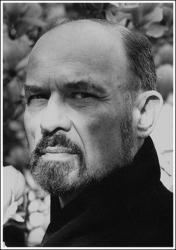
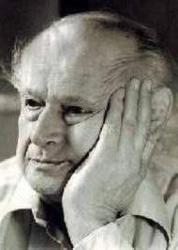
Rollo May
 USA
USA- Biography of Rollo May
- Early Life and Education
- Psychological and Philosophical Pursuits
- Contributions and Recognition
Biography of Rollo May
Rollo May was a renowned American existential psychologist who extensively examined the fundamental problems of human existence in his works. These problems included good and evil, freedom, responsibility and fate, creativity, guilt and anxiety, love and violence. His most well-known work, "Love and Will," became a national bestseller in the United States and received the Ralph Waldo Emerson Award for erudition in the field of human sciences in 1970.
Early Life and Education
Rollo Reece May was born on April 21, 1909, in the small town of Ada, Ohio. He was the eldest of six sons born to Earl Tittle May and Mabel Bauton May. The family eventually moved to Marine City, Michigan, where Rollo spent his childhood years. His upbringing was difficult as his parents were poorly educated and not particularly invested in their children's upbringing. Furthermore, he had to contend with his parents' divorce and his sister's mental illness. Rollo's father, a member of the Young Men's Christian Association, spent a lot of time traveling, which had a significant influence on the children. His mother, too, had minimal involvement in their upbringing and led a spontaneous lifestyle.
After completing high school, Rollo enrolled at the University of Michigan. His rebellious nature led him to the editorial staff of a radical student journal, which he eventually became the editor of. Numerous clashes with the administration resulted in his expulsion from the university. He transferred to Oberlin College in Ohio and graduated with a Bachelor of Arts degree in the humanities in 1930. Following his university education, Rollo traveled extensively through Eastern and Southern Europe, painting and studying folk art. As a free-spirited artist, he visited Turkey, Poland, Austria, and other countries.
Psychological and Philosophical Pursuits
During his second year of travels, Rollo suddenly felt incredibly lonely. In an attempt to alleviate this feeling, he immersed himself in teaching; however, this did little to help. The further he went, the more strained and ineffective his work became.
Upon his return to the United States, Rollo enrolled in the seminary of the Theological Society to seek answers to fundamental questions about nature and humanity, questions in which religion played a significant role. While studying at the Theological Society, Rollo met the renowned theologian and philosopher Paul Tillich, who had fled Nazi Germany and continued his academic career in America. Rollo learned a great deal from Tillich, and they became friends, remaining so for over thirty years. After completing the seminary, Rollo was ordained as a minister in the Congregational Church. He served as a pastor for two years but quickly became disillusioned, considering this path a dead-end. He then turned to psychoanalysis in search of answers to his questions.
Rollo studied psychoanalysis at the William Alanson White Institute of Psychiatry, Psychoanalysis, and Psychology. It was during this time that he also became acquainted with Harry Stack Sullivan, the president and one of the founders of the William Alanson White Institute. Sullivan's view of the therapist as a co-participant, rather than an external observer, and of the therapeutic process as an exciting adventure that could enrich both the patient and the doctor, deeply impressed Rollo. Another crucial event that shaped Rollo's development as a psychologist was his encounter with Erich Fromm, who had already established himself in the United States by then.
Contributions and Recognition
By 1946, Rollo decided to start his own private practice, and two years later, he began teaching at the William Alanson White Institute. In 1949, at the age of forty, he obtained his first doctoral degree in clinical psychology from Columbia University. He continued teaching psychiatry at the William Alanson White Institute until 1974. Perhaps Rollo would have remained just one of many therapists practicing at that time if not for the transformative existential event, as described by Jean-Paul Sartre, that occurred in his life. Even before earning his doctoral degree, Rollo experienced one of the most profound shocks of his life. When he was just over thirty years old, he contracted tuberculosis, an incurable disease at the time, and spent three years in a sanatorium in Saranac, in northern New York State. For a year and a half during his illness, Rollo did not know if he would survive. The realization of the complete inability to resist such a severe illness, the fear of death, the agonizing anticipation of monthly X-ray examinations that either meant a death sentence or prolonged waiting - all slowly eroded his willpower and dulled the instinct to fight for survival. Understanding that these seemingly natural psychological reactions were as detrimental to the body as physical torment, Rollo began to develop the view of illness as a part of his existence during that period. He realized that a helpless and passive position contributed to the development of the disease. Observing other patients, Rollo noticed that those who resigned themselves to their condition deteriorated rapidly, while those who fought usually recovered. Based on his own experience of battling the illness, Rollo concluded that active intervention by the individual was necessary in order to shape the course of events and one's own destiny. At the same time, he discovered that healing was an active process, not passive. A person afflicted with physical or mental illness had to be an active participant in the healing process. Fully convinced by his own experience, Rollo began to implement this principle in his practice, fostering in patients the ability to analyze themselves and correct the actions of the therapist. Having experienced fear and anxiety during his prolonged illness, Rollo began studying the works of classical thinkers on this subject, primarily Freud, as well as Søren Kierkegaard, a Danish philosopher and theologian who laid the groundwork for 20th-century existentialism. While highly valuing Freud's ideas, Rollo was more drawn to Kierkegaard's concept of anxiety as a hidden struggle against non-existence, which resonated with him on a deeper level.
Shortly after returning from the sanatorium, Rollo transformed his reflections on anxiety into a doctoral dissertation and published it as "The Meaning of Anxiety" in 1950. This first significant publication was followed by numerous books that brought him national and international recognition. His most famous book, "Love and Will," was published in 1969, became a bestseller, and received the Ralph Emerson Award in the following year. In 1972, the New York Society of Clinical Psychologists awarded Rollo the Martin Luther King Jr. Prize for his book "Power and Innocence."
In addition to his literary contributions, Rollo May was actively engaged in teaching and clinical work. He lectured at Harvard and Princeton and taught at Yale, Columbia, and Dartmouth Universities, as well as at the New School for Social Research in New York. He held an adjunct professorship at New York University, served as the chair of the Association for Existential Psychology, and was a member of the Board of Trustees of the American Mental Health Foundation.
On October 22, 1994, after a prolonged illness, Rollo May passed away in Tiburon, California, where he had resided since the mid-1970s.