Pavel Shipin
- Childhood and Early Education
- Friendship and Intellectual Exploration
- Career in Local Administration
- Recognition and Advancement
- Personal and Professional Growth
- Appointment to the District Zemstvo
- Education for His Son
- Election to the First State Duma
- Parliamentary Activism
- Dissolution of the First Duma and Repression
- Return to Cherevkovskaya Volost
- Legacy
Childhood and Early Education
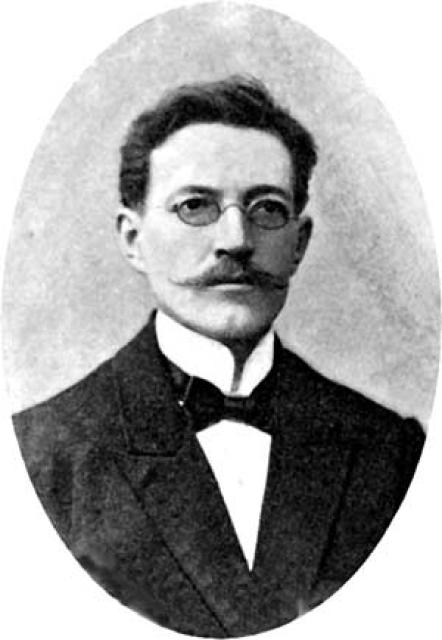
Pavel Dmitrievich Shchipin was born on November 2, 1873, in the village of Nizhnyaya Davydovskaya in the Solvychegodsk district of the Vologda province, to a wealthy peasant family. He was the son of Dmitry Illarionovich and Tatyana Timofeevna Shchipin. Growing up in a family where education was highly valued, Pavel's thirst for knowledge was evident from an early age. In 1882, he enrolled in the Cherevkovskoye one-class primary school, graduating in 1885. His exceptional academic abilities were recognized by his teacher, M.A. Voronov, who instilled in him a love for books.
Friendship and Intellectual Exploration
Outside the classroom, Pavel found intellectual companionship in his best friend and classmate, Andrei Petrov. Together, they sought guidance from Apollon Ivanovich Mishurinsky, the clerk of the Cherevkovsky volost government. Mishurinsky introduced them to the works of Russian literary giants, such as Pushkin, Lermontov, and Turgenev, as well as Western European writers like Cervantes and Molière. Their wide-ranging reading covered philosophy, astronomy, chemistry, and natural sciences. As Petrov wrote in his diary, "Books, books... these books... In my head, a terrible chaos: Darwin with astronomy, and Comte with theology, histories with prehistoric humans... In general, everything I have read is all recalled and wandering..." They acquired books and journals from the Cherevkovskoye public library, Mishurinsky, and schoolteachers.
Career in Local Administration
In 1892, Pavel married Darya Makarovna Zaikova, a decision met with skepticism by his friends. The same year, on Mishurinsky's recommendation, he was appointed as clerk of the Timoshinsky volost government. The young couple relocated to the Timoshinsky volost, about 30 versts from Cherevkovo, and settled into an apartment provided by the government.
As clerk, Pavel played a crucial role as the right-hand man of the volost elder, a position elected by the local community for a three-year term. The duties of the volost clerk were extensive and required a deep understanding of administrative procedures and legislation. Pavel excelled in this role, quickly demonstrating his efficiency and competence.
Recognition and Advancement
In 1893, Pavel and Darya welcomed their first child, a son named Evgeny. His performance as clerk in Timoshinsky earned him recognition from the district authorities, and he was soon promoted to the same position in the Cherevkovskoye volost, the largest in the Solvychegodsk district.
Returning to Cherevkovo, Pavel continued to impress with his dedication and hard work. He made regular trips to Solvychegodsk for official reports and participated in recruitment drives in neighboring towns. These experiences broadened his horizons and exposed him to new ideas and people.
Personal and Professional Growth
Despite a growing family and the demands of his job, Pavel remained committed to his own intellectual development. He pursued further education through correspondence and self-study. In 1898, a daughter named Olga was born, followed by Zoia two years later.
Appointment to the District Zemstvo
In 1901, Pavel received an offer to serve as a clerk in the Solvychegodsk district zemstvo. While the position was modest, it held the promise of greater advancement. The salary was also significantly higher, enabling him to better support his growing family.
Starting his new role on August 1, 1901, Pavel quickly gained recognition for his energy and initiative. He earned the respect of the chairman of the zemstvo and was valued for his unwavering commitment to his responsibilities.
Education for His Son
As his family continued to grow, Pavel became determined to provide a quality education for his eldest son, Evgeny. However, his salary as a zemstvo clerk was insufficient to cover the costs of a classical gymnasium education. In 1904, Pavel appealed to the zemstvo leadership, requesting a scholarship to support Evgeny's studies at the Vyatka gymnasium.
The zemstvo assembly approved the scholarship, citing Pavel's exemplary work ethic and his son's academic promise. In September 1905, Evgeny embarked on his educational journey in Vyatka.
Election to the First State Duma
In the wake of the 1905 Russian Revolution, elections were held to establish the first State Duma. Pavel Shchipin was elected as one of five deputies representing the Vologda province. He was a member of the Constitutional Democratic Party (Kadets) and advocated for land reform, self-government, and civil liberties.
Parliamentary Activism
In the State Duma, Shchipin was an active participant in legislative debates and submitted numerous inquiries to government officials. He raised concerns about famine, the mistreatment of political prisoners, and the suppression of civil rights.
Dissolution of the First Duma and Repression
The First Duma's opposition to the government was met with hostility, and it was dissolved on July 8, 1906. Shchipin, along with other deputies, signed the Vyborg Manifesto, which called for civil disobedience. Although he did not face the same level of retribution as those who signed the manifesto, Shchipin was dismissed from his zemstvo position and stripped of his civil rights.
Return to Cherevkovskaya Volost
Forced out of public service, Shchipin returned to Cherevkovskaya Volost, where he worked as a private citizen. He continued to write about political and social issues, but he was never able to regain his former prominence in political life.
Legacy
Pavel Dmitrievich Shchipin left an enduring legacy as an advocate for social justice and a champion of civil liberties. His contributions to the First State Duma and his unwavering commitment to the ideals of democracy and education continue to inspire those who strive for a better Russia.