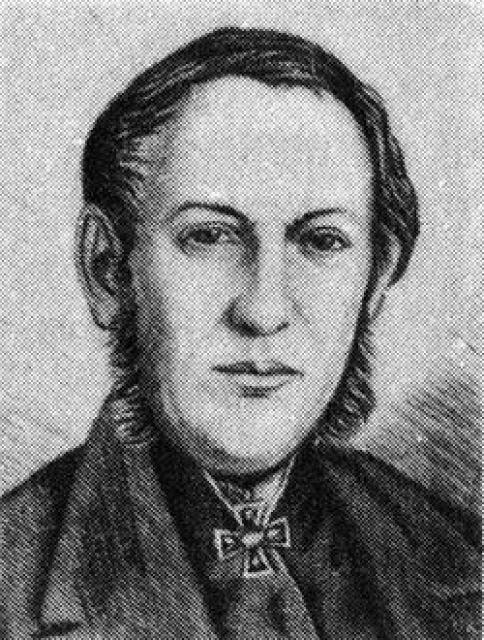
Pavel Stroev
 Russia
- Early Life and Education
- Literary Beginnings
- Archival Service and Archaeological Expeditions
- Scholarly Contributions
- Archaeological Commission and Bibliographical Work
- Later Years as an Academician
Early Life and Education
Pavel Mikhailovich Stroev (1796-1876) was a prominent Russian historian, arheographer, and bibliographer. His passion for history emerged during his childhood and flourished during his studies at Moscow University (1813-1816), where he was influenced by the lectures of Merzlyakov, Kachenovsky, and especially Timkovsky.
Literary Beginnings
In 1813, Stroev penned "A Concise Russian History for Beginners," a textbook that remained popular into the 1830s. From March to July 1815, he published the journal "Contemporary Observer of Russian Literature," which showcased his critical prowess. His articles in "Son of the Fatherland" (1814 and 1815) advocated for accurate genealogies of Russian princes and brought him to the attention of Chancellor Count N.P. Rumyantsev.
Archival Service and Archaeological Expeditions
In 1816, Stroev joined the archive of the Ministry of Foreign Affairs, where he contributed to the publication of "A Collection of State Charters and Treaties." During his time in Count Rumyantsev's circle (1816-1826), he participated in expeditions with K.F. Kalaidovich to search for ancient manuscripts in suburban monasteries. These expeditions unearthed valuable documents such as the 1073 Svyatoslav Collection, the Legal Code of Grand Prince Ivan III, and the works of Kirill of Turov.
Scholarly Contributions
Stroev's scholarly works included "A Detailed Description of Slavonic-Russian Manuscripts in the Library of Volokolamsk Monastery" (the first of its kind in Russian literature), "Laws of Grand Prince Ivan Vasilievich and his Grandson Tsar Ivan Vasilievich" (1819), and "Sofia Chronicle" (1820-1822). In his preface to the "Sofia Chronicle," he argued that chronicles are compilations rather than singular works. He also described the manuscripts of Count F.A. Tolstoy (1825) and his old printed books (1829).
Archaeological Commission and Bibliographical Work
As a member of the Moscow Society for Russian History and Antiquities (from 1823), Stroev identified Georgius Hamartolus as the unknown Byzantine source used by Nestor the Chronicler. Recognizing the abundance of hidden historical documents, he advocated for an archaeological expedition and drafted a comprehensive plan for their systematic collection, description, and publication.
In 1828, Stroev led the Archaeological Commission's expedition, which examined over 200 libraries and archives in northern and central Russia. The expedition yielded a wealth of historical documents, including legal acts, chronicles, and religious texts.
Stroev used this material to compile a bibliographic dictionary of works and translations published in the 18th century, a laborious undertaking that was posthumously published.
Later Years as an Academician
Elected to the Academy of Sciences in 1841, Stroev continued his research, compiling lists of Russian church hierarchs and indexes to historical documents. His publications included "The Key to the History of the Russian State" (1836), "A Description of the Old Printed Books of I. Tsarsky" (1836), and "The Manuscript of Artillery Major Danilov" (1842). He also published "The Exits of the Tsars and Grand Prince Mikhail Feodorovich, Alexei Mikhailovich, and Feodor Alekseevich" (1844), based on archival materials from the Armory Palace.
Stroev's contributions to Russian historiography were immense. The wealth of fresh and valuable material he made available fueled advancements in historical research. His meticulous descriptions and archival work formed a foundation for the groundbreaking works of later historians such as Karamzin and Soloviev.


