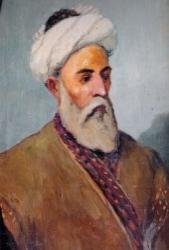
Pavlo Tichina
 Ukraine
Early Life
Pavlo Tychyna was born into a rural deacon's family in Ukraine. His father's death in 1906 left him financially burdened, leading him to sing in a monastery choir to support himself while attending school. In 1907, he enrolled in a spiritual seminary, followed by Kyiv Commercial Institute in 1913.
Literary Beginnings
Tychyna's first poem appeared in print in 1912. Influenced by Ukrainian writer Mykhailo Kotsiubynsky, his early works demonstrated a blend of symbolism and Baroque elements. His 1919 collection, "Solar Clarinets," introduced Ukrainian symbolism.
Political Prominence
The 1917 Revolution saw Tychyna actively involved in Ukrainian politics. He held various positions, including Minister of Education and Chairman of the Supreme Council. He also became an academician of the Academy of Sciences and a Hero of Socialist Labor.
"Soviet" Period
By the early 1920s, Tychyna had become increasingly aligned with Soviet ideology. Despite accusations of bourgeois nationalism, he capitulated to Bolshevism, producing propaganda-infused poems that entered school curricula. His later work continued in this vein, although his true talent occasionally emerged in unfinished poems and posthumous publications.
Literary Legacy
Tychyna's early works synthesized symbolism and Baroque influences, establishing him as a significant Ukrainian poet. However, his later political conformity overshadowed his literary stature. Despite becoming an exemplary Stalinist bard, Tychyna's imposing creative talent remained evident in his unfinished works and translations.