Peggy Guggenheim
 USA
USA- Peggy Guggenheim: An American Art Collector and Patron
- Early Life and Inheritance
- Bohemian Life in Paris
- Establishing Art Galleries
- A Shift Towards Modern Art
- The Guggenheim Museum in Venice
Peggy Guggenheim: An American Art Collector and Patron
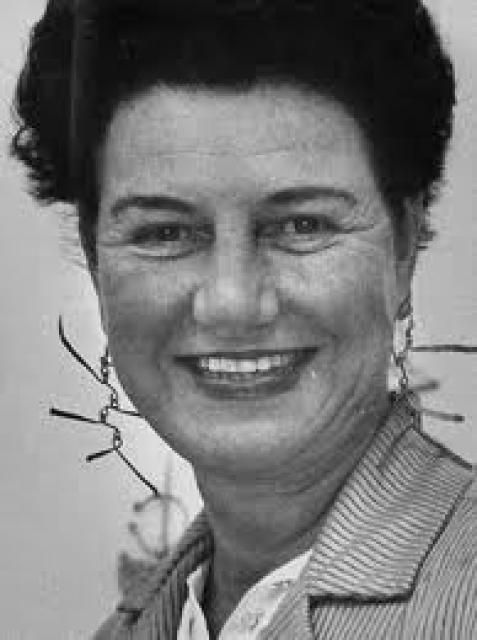
Peggy Guggenheim was an American art collector, patron, and socialite. She was the daughter of Benjamin Guggenheim, who tragically lost his life aboard the Titanic, and the niece of philanthropist and patron Solomon R. Guggenheim. Between 1938 and 1946, Peggy assembled a vast collection of European and American art. From the very beginning, she exhibited her collection in various exhibitions and in 1949, she established her own museum in Venice, where she lived until her death.
Early Life and Inheritance
Peggy's father, Benjamin, was a Swiss-German with Jewish roots, while her mother's ancestors hailed from the Netherlands and were also Jewish. In 1919, when Peggy turned 21, she inherited a fortune of $2.5 million, which is equivalent to approximately $20 million today. Although her inheritance was significantly smaller than that of her wealthy cousins, Peggy made the most of her wealth by pursuing her passion for art.
Bohemian Life in Paris
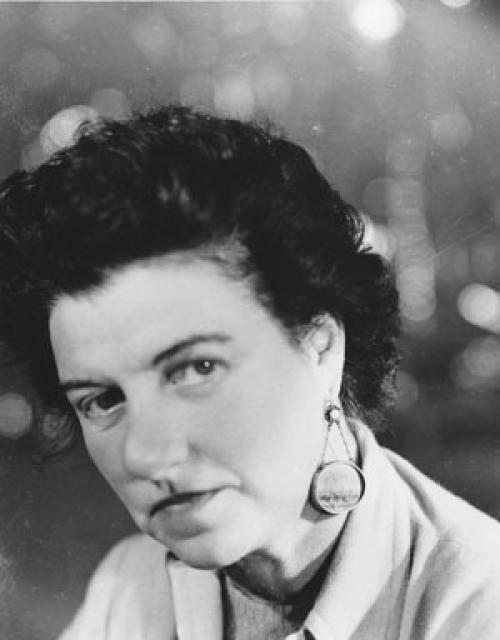
Peggy began working at an avant-garde bookstore, where she became acquainted with members of the bohemian artist society. In 1920, she moved to Paris and befriended avant-garde writers and artists, many of whom were impoverished and lived in the Montparnasse quarter. Among her close friends were May Ray, Constantin Brâncuși, and Marcel Duchamp, whose work she later promoted. Peggy also became a close friend of Natalie Barney and Romaine Brooks, frequenting Barney's salon. During this period, she also met Djuna Barnes, becoming her friend and patron. Barnes wrote her most famous novel, 'Nightwood,' while living in Hayford Hall, which Peggy had leased for her for two years.
Establishing Art Galleries
In January 1938, Peggy opened a gallery of modern art in London, showcasing the works of Jean Cocteau in her first exhibition. When World War II broke out, she began acquiring numerous abstract and surrealist artworks. Her first gallery, named 'Guggenheim Jeune,' was located at 30 Cork Street and gained success thanks to the advice and support of her many friends. Marcel Duchamp helped Peggy establish herself in the art world, introducing her to many artists and providing her with knowledge of contemporary art and its movements. Following Jean Cocteau's exhibition, the gallery presented works by Wassily Kandinsky, Yves Tanguy, Wolfgang Paalen, and several other artists.
A Shift Towards Modern Art
When Peggy realized that her gallery had incurred a loss of £600 in its first year, she decided to spend her money more practically. Modern art became her main focus, and she recalled her uncle Solomon R. Guggenheim, who had established his own foundation to support abstract painting two years prior. Together with art historian and critic Herbert Read, they began planning for an art museum in London. In August 1939, Peggy traveled to Paris to discuss a loan for her first exhibition. However, shortly after her arrival, World War II erupted, prompting her to change her plans. She decided to purchase paintings from all the artists listed by Read. With ample time and access to museum funds, Peggy started acquiring one painting per day. In April 1940, she leased a space in Paris, intending it to be her new museum. Just days before the German occupation of Paris, Peggy abandoned her plans once again and relocated to the south of France, then to New York, where she organized a small gallery, exhibiting a portion of her collection.
The Guggenheim Museum in Venice
After the war, Peggy returned to Europe and settled in Venice, Italy. In 1948, she began exhibiting her collection at the Venice Biennale and in 1949, she established her own museum. Today, Peggy Guggenheim's collection is considered one of the most important museums of European and American art in Italy, founded in the first half of the 20th century. The collection features paintings in the styles of Cubism, Surrealism, and Abstract Expressionism.