Peiyuan Zhou
 China
China- Child Prodigy and Early Education
- Academic Pursuits in the United States
- European Influences and Return to China
- Marriage and Collaboration with Einstein
- Return to China Amidst War
- Academic Leadership and Recognition
- International Recognition and Political Involvement
- Legacy and Demise
Child Prodigy and Early Education
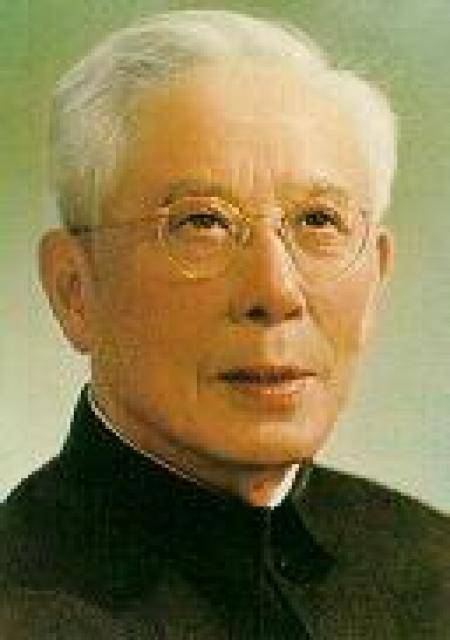
Born on August 28, 1902, in Yixing, Jiangsu Province, Qian Weichang was the son of a scholar. His brilliance was evident from a young age, and he enrolled at Tsinghua Polytechnic Institute in 1919.
Academic Pursuits in the United States
Due to his exceptional academic achievements, Qian was chosen to continue his studies abroad. He traveled to the United States in 1924 and enrolled at the University of Chicago, where he earned a Bachelor's degree in spring 1926 and a Master's degree that same year. He pursued his doctorate in physics at the California Institute of Technology, graduating in 1927-28.
European Influences and Return to China
In 1928, Qian embarked on a trip to Germany, where he conducted research at the University of Leipzig under Werner Heisenberg. The following year, he moved to the Swiss Federal Institute of Technology in Zurich, where he worked with Wolfgang Pauli. In 1929, he returned to China and became a professor at Tsinghua University.
Marriage and Collaboration with Einstein
In 1932, Qian married Wang Dicheng, with whom he had four daughters. In 1936-37, he returned to the United States and joined the Institute for Advanced Study in Princeton, where Albert Einstein became his mentor.
Return to China Amidst War
Qian returned to China in 1937, but his scientific endeavors were interrupted by the Sino-Japanese War and later World War II. He resumed his research at the California Institute of Technology from 1943-46 and returned to China once more in 1947, continuing his teaching at Tsinghua University.
Academic Leadership and Recognition
In 1952, Qian became a professor at Peking University, which he later led as president from 1978 to 1981. He was elected an academician of the Chinese Academy of Sciences in 1955 and served as its vice-president from 1978 to 1991.
International Recognition and Political Involvement
In 1980, Qian received an honorary doctorate from Princeton University. From 1987 to 1992, he also served as the chairman of the September Third Society ("Jiusan"), a minor political party in China.
Legacy and Demise
Qian Weichang passed away in Beijing on November 24, 1993, at the age of 92. Throughout his illustrious career, he made significant contributions to theoretical physics and education in China, leaving a lasting legacy as one of the most influential scientists of his time.