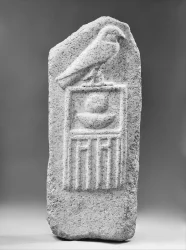
Pepi II
Pepi II Neferkare ruled Egypt during the Sixth Dynasty, at the end of the Old Kingdom. He is often credited with one of the longest reigns in history, and later accounts say he came to the throne as a child and ruled for more than ninety years. Modern Egyptologists caution that the exact length remains disputed. His reign is remembered through royal monuments, records of expeditions into Nubia, and the gradual shift of power toward provincial officials.
A child on the throne
Pepi II succeeded his half-brother Merenre I, probably while still very young. The precise dates of his reign are uncertain, as is the chronology of the late Old Kingdom. The Turin King List preserves a reign of more than ninety years, and the later Egyptian historian Manetho gives him ninety-four. That figure made him famous as a possible record-holder among monarchs.
The surviving contemporary evidence does not settle the question. An inscription records a year after the thirty-first cattle count. If those counts were biennial, this would point to a reign of at least about sixty years; scholars debate the counting system and whether later records have been lost. The careful conclusion is that Pepi II ruled exceptionally long, while the traditional ninety-four years may not be exact.
Court and expeditions
A remarkable document connected with Pepi II survives in the tomb inscription of Harkhuf, a governor and expedition leader based at Elephantine in southern Egypt. Harkhuf described journeys into Nubia and the southern land of Yam, returning with valuable goods. On one expedition he brought a small-statured dancer to the royal court. Pepi’s letter, copied into Harkhuf’s tomb, excitedly urged the official to protect the traveler during the journey and promised rewards for his safe arrival.
The message offers an unusually personal glimpse of the young king, though it is also a formal royal command. It shows the court’s interest in long-distance expeditions and in the people and goods brought from regions south of Egypt. The Egyptian state relied on officials who organized trade, diplomacy, and travel through challenging territory.
Pepi II’s pyramid and funerary complex were built at South Saqqara. The complex included a pyramid temple and subsidiary pyramids associated with royal women, among them queens Neith, Iput II, and Wedjebten. Its inscriptions and reliefs placed the king within established traditions of royal power and religious protection. The monument is among the best-known royal funerary complexes of the Old Kingdom.
An age of transition
During the Sixth Dynasty, provincial officials gained greater prominence, and some built elaborate tombs far from the royal cemetery. Egypt remained a powerful kingdom during Pepi II’s rule, but the growing independence of local elites contributed to a longer process of decentralization. Historians do not treat the Old Kingdom’s end as the result of one cause: dynastic changes, provincial politics, environmental stress, and other pressures all formed part of the transition.
After Pepi II’s death, the throne passed through a succession of rulers whose reigns appear much shorter in the surviving king lists. The Old Kingdom gave way to the First Intermediate Period, a time when central authority weakened and rival centers of power emerged. The chronology and pace of this change remain subjects of scholarly discussion.
Legacy
Pepi II’s reputation rests on two contrasting legacies: the almost legendary length of his rule and his place at the close of a major era in Egyptian history. The famous letter to Harkhuf preserves a vivid detail of royal life, while his pyramid at Saqqara testifies to the monumental ambitions of the Old Kingdom. Whether he reigned for ninety-four years or a considerably shorter span, his long rule became a landmark in Egypt’s royal tradition.