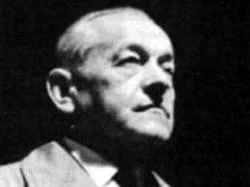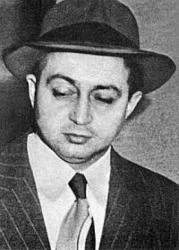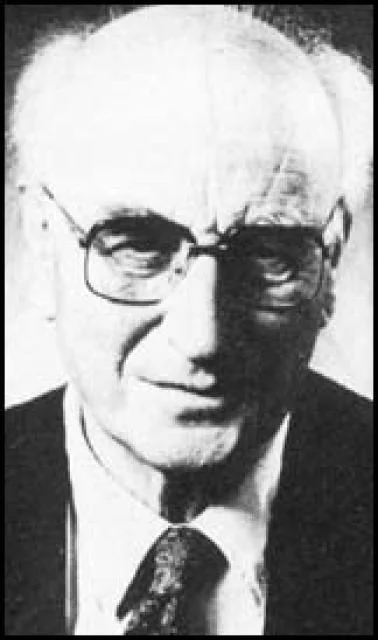
Peter Wright
Peter Wright began as a scientist and became one of Britain’s most controversial intelligence officers. His technical expertise helped shape MI5’s surveillance work, while his 1987 memoir Spycatcher turned a private career in counterintelligence into a public legal and political battle over secrecy and the government’s right to silence former officials.
From science to intelligence
Wright was born in Chesterfield, England, on August 9, 1916. His father, Maurice Wright, was a scientist who became chief scientist at the Marconi Company and had earlier worked in British intelligence. Peter followed a technical path of his own, joining the Royal Naval Scientific Service during the Second World War and working on wartime electronics.
After the war, he continued in scientific research and became involved in technical advice to the intelligence services. In 1955, he joined MI5, Britain’s domestic security service. His scientific background made him an important figure in the development of surveillance and counterintelligence techniques. He served for about two decades, rising to senior scientific and managerial positions before retiring in 1976.
The claims behind Spycatcher
After leaving MI5, Wright settled in Australia and began writing about his years in the service. In Spycatcher: The Candid Autobiography of a Senior Intelligence Officer, published in 1987 with journalist Paul Greengrass, he described covert operations and alleged deep failures within British intelligence. Most controversially, he argued that former MI5 director Roger Hollis had been a Soviet agent. The allegation was never substantiated and remains disputed.
The British government tried to prevent publication, arguing that Wright was bound by official secrecy. A prolonged legal fight in Australia and Britain made the book a worldwide bestseller and brought the usually private work of MI5 into public debate. Its publication helped shape public discussion about intelligence oversight, state secrecy and the limits of government censorship.
A complex legacy
Wright’s memoir remains a notable firsthand account of mid-century British counterintelligence, but its claims have been treated with caution by historians and officials. Its author was at once a skilled technical officer and a critic of the institution he had served. He died in Hobart, Tasmania, on April 27, 1995, aged 78.