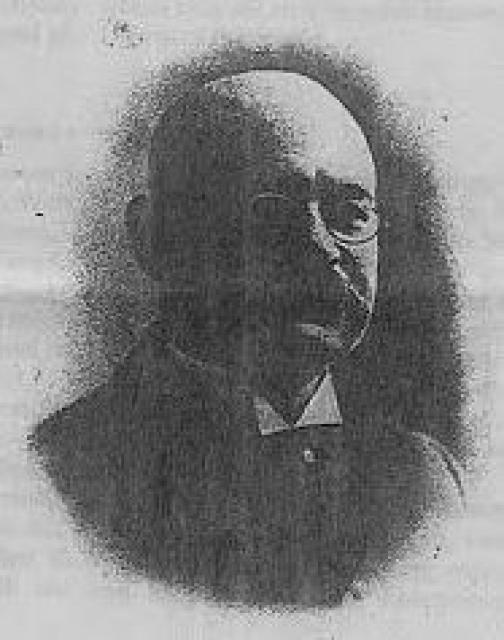
Philip H. Diehl
 USA
USA- Philip Diehl: German-American Engineer and Inventor
- Early Life and Career
- Innovations and Inventions
- Impact on Lighting Technology
- Electric Motor Innovations
- Electrical Devices and Exhibits
- Legacy and Death
Philip Diehl: German-American Engineer and Inventor
Philip Diehl, a German-born inventor and engineer, holds numerous patents for innovations including a variation of the incandescent light bulb, electric motors for sewing machines, and ceiling fans. His rivalry with Thomas Edison is credited with reducing the cost of Edison's bulbs.
Early Life and Career
Born in Dalsheim, Germany, Diehl immigrated to New York City in July 1868. After working in various machine shops, he found employment with the Singer Manufacturing Company. In 1870 or 1871, he relocated to Chicago, Illinois, where he worked for the Remington Machine Company until 1875. The Great Fire of 1871 significantly impacted Diehl, as he lost most of his belongings. In 1873, he married Emilie Loos.
Innovations and Inventions
In 1875, Diehl moved to Elizabeth, New Jersey, where he supervised an experimental project for improving sewing machines at the Singer factory. While working for Singer, he devoted his evenings to developing his own inventions, including a unique electric light bulb. Made in the basement of his New Jersey home, Diehl's bulb differed from Edison's by using no wires inside the glass envelope, instead employing two coils of wire on the outside. He obtained his first patent for this design in 1882.
Impact on Lighting Technology
Although Diehl's bulbs could not compete with Edison's due to their higher cost, Westinghouse purchased his patent and used it to pressure Edison into lowering his prices. Diehl's work also extended to practical inventions, including the oscillating shuttle driver for sewing machines.
Electric Motor Innovations
Diehl's most renowned "sewing" invention was the universal electric motor. Initially developed for sewing machines, its adaptability to other applications soon became evident.
Electrical Devices and Exhibits
In 1884, Diehl exhibited a dynamo at the Franklin Institute in Philadelphia, Pennsylvania, which powered Franklin's electric lamp and sewing machine. While electric fans had existed since 1882, Diehl's improvement involved mounting a fan on one of his motors and suspending it from the ceiling. Later, he added lights to the fan blades to eliminate the "floating shadow" problem and provide better illumination.
Legacy and Death
Philip Diehl passed away on April 7, 1913, in Elizabeth, New Jersey, at the age of 66. His innovative contributions continue to be remembered for their impact on lighting, sewing technology, and electrical appliances.


