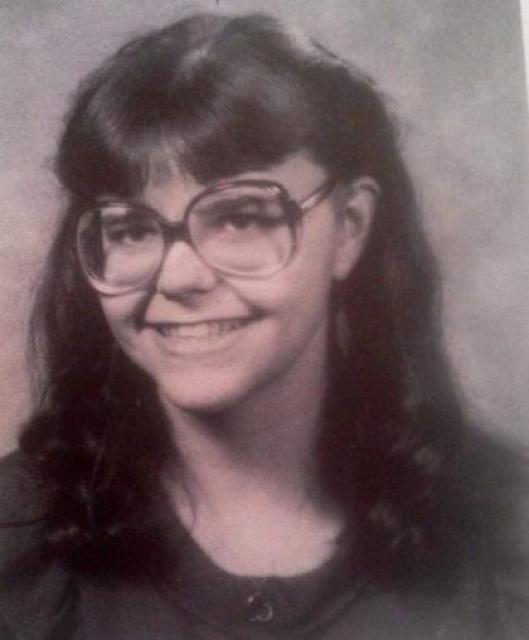
Pia Farrenkopf
 USA
USAAmerican financier, digital ghost
We do not know for sure what caused the death of Pia Farrnkopf, and this part of her story does not interest anyone. What is much more intriguing is what happened to Farrnkopf after her death, because thanks to advanced technology, she appeared to the world as alive and well for a whole 5 years. Pia Farrnkopf died quietly and unnoticed in early 2009, in the backseat of her own jeep. The car was parked in her own garage, so no one noticed her death. Life in Pontiac, Michigan, went on as usual; only occasionally did her considerate neighbors have to take care of her overgrown lawn, but no one paid much attention to it. This charming idyll lasted for 5 years; her body was only discovered last month. Later, neighbors explained that Farrnkopf traveled a lot for work, which is why she spent relatively little time at home. That is why no one was surprised by her prolonged absence, and that is why her neighbors took care of her lawn without any complaints. She left her job as a contractor at Chrysler Financial a few months before her death, and it seems she never found a new job, so no one missed her there either. Pia's family lived quite far away, and she did not maintain close ties with them. Often, in similar situations, creditors are the first to remember the deceased; it was the mortgage debt that eventually led to the discovery of Pia. The delay of 5 years was due to the fact that Pia had accumulated a considerable amount of wealth during her life; she had arranged for all utility bills and the mortgage to be automatically paid from her account. Even after her death, money continued to flow in; even while dead, Pia proved to be a very meticulous payer. It was only last year that Pia's savings ran out, and the bank employees began to worry. In the end, the bank decided to collect the mortgage debt; the employee who was sent to inspect the house discovered Pia Farrnkopf's body. By that time, the body had already turned into a mummy, and no one had moved it from its original place - Pia's remains were still in the same place where she died. The police did not immediately fully understand whose body was found in Farrnkopf's car; later, Pia's identity was established, but then another important question arose - how exactly did she die? Another interesting question is whether Pia was dead all this time. From the outside world's perspective, Farrnkopf's behavior remained virtually unchanged - her digital double, created using advanced technology, continued to manage her affairs, solve her problems, and meticulously pay her bills. Each of us has similar digital doubles; by using social networks and online stores, sending emails, and paying bills online, we leave a certain trace that, upon closer examination, can identify and describe us with frightening accuracy. At a certain point, for certain resources, this trace begins to determine and define us ourselves; the final stage - the automation of some processes that leave this trace - leads to the creation of these digital ghosts. As Pia Farrnkopf's story shows, in certain cases, such ghosts can outlive us by several years.
Other problems are also associated with digital ghosts - if Farrnkopf's story, absurd as it may be, is more of a curiosity than a scary one, in other cases, having a large number of traces on the Internet can lead to extremely unpleasant consequences. Imagine that someone can steal your 'digital double'; an expert in illegal aspects of information technology can often steal not just your photos from your last vacation and correspondence with the nearby pizzeria, but also a set of extremely important data, such as numbers and serials of key documents, bank account information, and other private information. The problem is that we carry these ghosts with us throughout our lives - and you can suffer a cruel blow not only by carelessly downloading pornography from potentially dangerous websites but also by ordering pizza with anchovies on a well-known and trusted site. No evil intent could be found in Pia Farrnkopf's story, not even by the most meticulous judge; no opponent of the dominance of high technology would argue that the bank employees should have called her for personal meetings just to make sure that she had not left this valley of sorrow. However, there is something inexplicably frightening about what happened - and this story makes us think that there is a grain of truth in the words of people who prefer to minimize the number of traces they leave on the Internet.