Sergey Schukin
 Russia
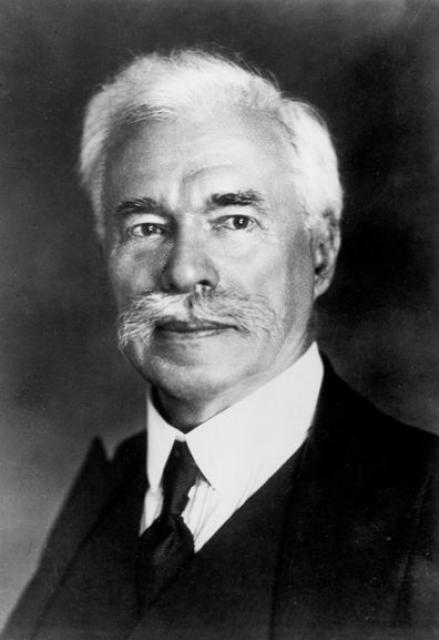
Biography of Sergei Shchukin
Sergei Ivanovich Shchukin was a Moscow merchant, entrepreneur, and art collector. He was born into an old-believer merchant family and was the brother of Dmitry and Peter Shchukin. He received his higher education in Germany at the Higher Commercial Academy in Gera, Thuringia, around 1876. After his father's death, he became the successor of his father's business in the partnership "I. V. Shchukin with Sons."

During the All-Russian strike of 1905, Shchukin accumulated his fortune by buying up all the manufactured goods during a panic, thus gaining a monopoly on the market. In the autumn of 1919, he emigrated to Germany and later settled in Nice. He passed away in Paris in 1936. Shchukin is known as one of the prominent patrons of the Silver Age. Unlike most other Russian collectors of the late 19th and early 20th centuries, Shchukin bought paintings according to his own taste, preferring the Impressionists and later the Post-Impressionists.
Interests in Post-Impressionism
Shchukin's interest in Post-Impressionism began after 1904. From that time on, he frequently traveled to Paris and even transferred a significant amount of money to a special account in Berlin to quickly pay for his purchases. This money proved useful when Shchukin found himself in exile. In 1909, Shchukin opened his mansion to the public, allowing anyone interested to visit his collection. This decision caused concern among the professors of the Moscow School of Painting, who were worried about the impact on their students' artistic vision.
In 1882, Shchukin purchased a mansion belonging to the Trubetskoy princes on Bolshoy Znamensky Lane, 8. He then sold the princely collections of weapons and paintings by the Peredvizhniki artists and acquired several Norwegian landscapes by Frits Thaulow, which became the nucleus of his future collection.
Unlike his brothers, who were passionate collectors, Sergei Shchukin only developed an interest in collecting in his fifties, focusing exclusively on contemporary art and later focusing on a particular French school. In a short time, he became one of the most favored clients of Parisian art dealers. Shchukin maintained contacts with the renowned dealer Paul Durand-Ruel, introduced to him by a distant relative, the artist Fyodor Botkin. He acquired a significant portion of his Cézanne paintings from Ambroise Vollard, possessing a total of eight of them. It is believed that the first Monet painting to appear in Russia, bought by Shchukin in November 1898, was "Rocks in Belle-Île" (State Hermitage Museum).
By the mid-1900s, he had acquired eleven of Monet's works, including "Lilacs in the Sun" and "Rocks in Belle-Île," and later the famous "Luncheon on the Grass."
In the following years, his collection was enriched with works by James McNeill Whistler, Pierre Puvis de Chavannes, Paul Signac, and Henri Rousseau. Shchukin developed a close collaboration with Henri Matisse, commissioning him to create the panels "Music" and "Dance," as well as "Harmony in Red (The Red Room)," specifically ordered for his dining room in 1908.
The paintings by Matisse in Shchukin's mansion, including "The Card Players," were placed under the artist's personal supervision during his visits to Moscow. In the dining room of the mansion, there were 16 paintings by Gauguin, closely hung together to create the impression of a fresco or an iconostasis, as noted by the magazine "Apollo." Eleven of these works came from the collection of Gustave Fayet, which Shchukin bought in bulk from the Durand-Ruel gallery. Shchukin had to make an effort to appreciate Picasso's works. After buying his first painting, he hung it in his office and spent a long time getting used to it, contemplating it in solitude. However, he soon acquired almost the entire Tahitian cycle. As Picasso refused to exhibit his works, Shchukin became acquainted with them by visiting private homes, including Gertrude Stein's salon and the collections of her brothers, Leo and Michael. Shchukin's purchases included "The Absinthe Drinker," "An Old Jew with a Boy," "Portrait of the Poet Sabartes," other works from the Rose and Blue periods, as well as the Cubist pieces "Woman with a Fan" and "Factory in Horta de Ebro." Shchukin's collection was also enriched with Picasso's works from the Stein collection, which was sold off in 1913.
Legacy and Fate of the Collection
In 1882, Sergei Shchukin made his first art purchases. In 1909, he opened his collection to the public. In the autumn of 1918, Lenin's decree on the nationalization of Sergei Ivanovich Shchukin's gallery was published, by which time he had already emigrated. His daughter, Ekaterina Sergeevna Keller, became the custodian of the collection. In the spring of 1919, the collection was opened for public viewing under the name "The First Museum of New Western Painting." In 1929, the collection was merged with the Morozov collection (the "Second Museum of New Western Art") and moved to the former mansion of Ivan Morozov, which was renamed the State Museum of New Western Art (GMNZI). In 1948, GMNZI was dissolved during the campaign against cosmopolitanism. Many of the paintings were under the threat of destruction, but they were eventually divided between the Hermitage Museum and the State Tretyakov Gallery.